

Contact Admission
International Collaboration



The First Tissue Bank in Central Vietnam Officially Commences Operations
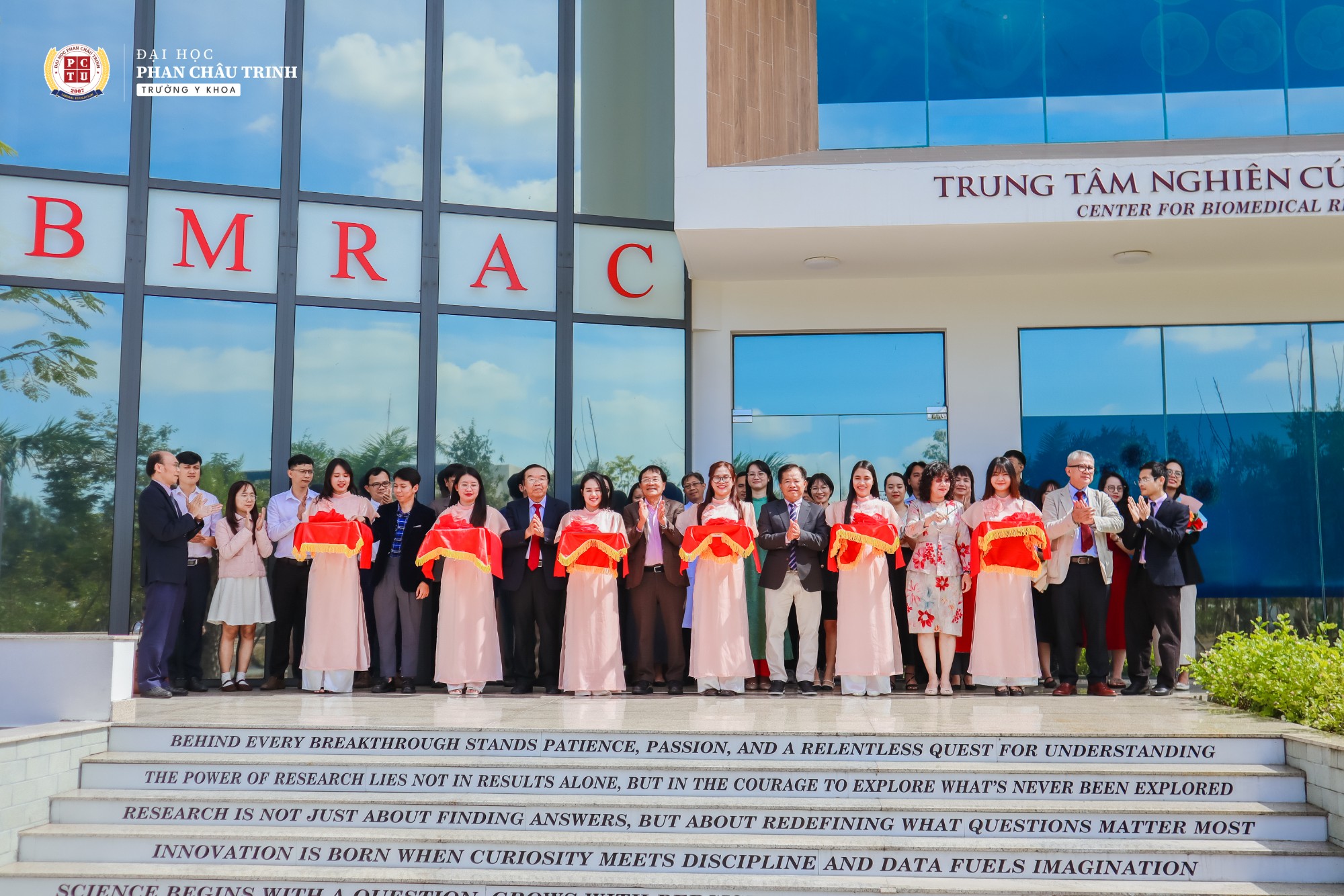
Newlife Tissue Bank, under the Phan Chau Trinh Medical University - Hospital, has officially received its operating license from the Ministry of Health, marking the establishment of the first tissue bank in Central Vietnam and opening a new approach in medical treatment, research, and medical education.
With its integrated clinical – research – training model, the bank not only supplies high-quality tissues and stem cells to hospitals, contributing to the treatment of common chronic diseases in Central Vietnam, but also provides a practical and research foundation for medical students, physicians, healthcare professionals, and researchers.
Connecting Clinical Practice – Research – Education
Newlife Tissue Bank, part of the Phan Chau Trinh Medical University - Hospital, serves as a bridge between the university, hospital, and research center. Built on an integrated training – clinical – research model, the tissue bank meets practical treatment needs while serving as a vital foundation for scientific research and medical education.
In clinical practice, Newlife Tissue Bank supplies tissues and stem cells to hospitals in the region for transplantation and treatment, thereby expanding access to advanced healthcare services for the community.
In research, the bank collaborates with and provides valuable biological resources to the Center for Biomedical Research and Application to implement studies on stem cells and regenerative medicine.
In education, Newlife Tissue Bank creates a learning and practical training environment for medical students, physicians, and young scientists in the field of medical biotechnology.
The bank is responsible for receiving, processing, preserving, storing, and transporting adipose tissue, umbilical cord tissue, cord blood, and stem cells derived from these tissues, ensuring quality standards for supply to medical institutions, research centers, and medical training facilities.
It also exchanges tissues and stem cells with other domestic and international tissue banks for medical treatment, education, and research purposes in compliance with regulations on science and technology, clinical trials, biomedical research ethics, and personal data protection.
Valuable Biological Resources for Regenerative Medicine
One of the core functions of Newlife Tissue Bank is the collection and reception of tissues and stem cells from voluntary donors and patients wishing to store autologous samples. Tissue sources such as cord blood, umbilical cord tissue, and adipose tissue undergo rigorous screening and testing to eliminate non-compliant samples, ensuring full adherence to ethical, legal, and medical standards.
After collection, samples are processed to isolate hematopoietic stem cells and mesenchymal stem cells, then preserved short- and long-term using liquid nitrogen systems and ultra-low temperature freezers, maintaining quality in accordance with GMP-WHO standards. All sample data are encrypted and electronically managed to ensure traceability and personal data security.
These biological resources not only support research but also aim to advance treatment for common diseases, particularly chronic conditions such as COPD, joint disorders, and diabetes—health issues with high prevalence in Central Vietnam.
Comprehensive Investment in Equipment and Human Resources
In addition to the equipment system at Phan Chau Trinh University Hospital, Newlife Tissue Bank has been comprehensively invested in infrastructure with nearly 100 new devices that have been calibrated and certified. Core equipment groups include tissue collection and processing systems, cell culture and expansion equipment, quality control and testing systems, and long-term ultra-low temperature storage systems.
Notably, the -196°C liquid nitrogen tank system is connected to automated monitoring, providing alerts in case of temperature or nitrogen level fluctuations, along with a dual power supply system (UPS and backup generators), ensuring continuous storage even in emergency situations.
In terms of human resources, the bank is staffed by PhDs, master’s, and bachelor’s degree holders in biochemistry, biomedical sciences, bioinformatics, genetic engineering, laboratory sciences, nursing, and biology, trained both domestically and internationally. This core team ensures the operation of the tissue banking system in accordance with international standards.
Standardized Procedures and Biosafety Assurance
Newlife Tissue Bank has developed 52 administrative procedures and 42 technical protocols covering all operations from stem cell isolation, culture, preservation to distribution. These procedures emphasize biosafety control, cleanroom management, waste treatment, microbiological monitoring, and rigorous quality assessment based on strict criteria such as identification, quantification, endotoxin testing, and screening for bacterial, fungal, and mycoplasma contamination.
Stem cell preservation in liquid nitrogen at -196°C allows for long-term quality maintenance while optimizing thawing and recovery processes for research and treatment purposes.
Research Orientation and Community Service
Newlife Tissue Bank focuses on developing regenerative medicine associated with disease treatment, providing safe and stable tissue and stem cell supplies to hospitals in the region; supporting scientific research and clinical trials; and serving as a practical training environment for medical students and young physicians.
The establishment of Newlife Tissue Bank is considered a significant milestone in the research and education development strategy of Phan Chau Trinh University of Medicine, contributing to enhanced treatment capacity, promoting biomedical technology transfer, and opening opportunities for people in Central Vietnam to access advanced medical achievements in the future.
Other news
- Patients satisfied with minimally invasive treatment ( 13:35 - 15/09/2026 )
- A new academic year begins with values carried forward ( 08:03 - 12/09/2026 )
- Exploring clinical placement opportunities in Australia with Bond University for PCTU medical students ( 09:29 - 27/08/2026 )
- Two research centers – one shared vision in regenerative medicine ( 09:13 - 27/08/2026 )
- Continue collaborating with Bond University to expand the clinical internship network. ( 08:37 - 27/08/2026 )
- Continue training faculty members of the Institute–University on simulation-based teaching methods ( 08:04 - 22/08/2026 )
- Da Nang C hospital connects with PCTU to strengthen professional exchange in hospital–university collaboration ( 09:20 - 21/08/2026 )
- Welcoming Korean students to PCTU for cadaveric anatomy study ( 16:04 - 18/08/2026 )
- CONNECTING SCIENCE, CREATING NEW SOLUTIONS FOR REGENERATIVE MEDICINE ( 08:57 - 18/08/2026 )
- PCTU Discusses AI Applications in Healthcare with AITRICS ( 08:51 - 17/08/2026 )
PHAN CHAU TRINHUNIVERSITY
- 09 Nguyen Gia Thieu street,
Dien Ban Dong ward,
Da Nang city
Phan Chau TrinhUniversity’s Hospital
- 09 Nguyen Gia Thieu street,
Dien Ban Dong ward,
Da Nang city