

Contact Admission
International Collaboration


PCTU Explores Mayo Clinic’s Expertise in Conducting Clinical Trials
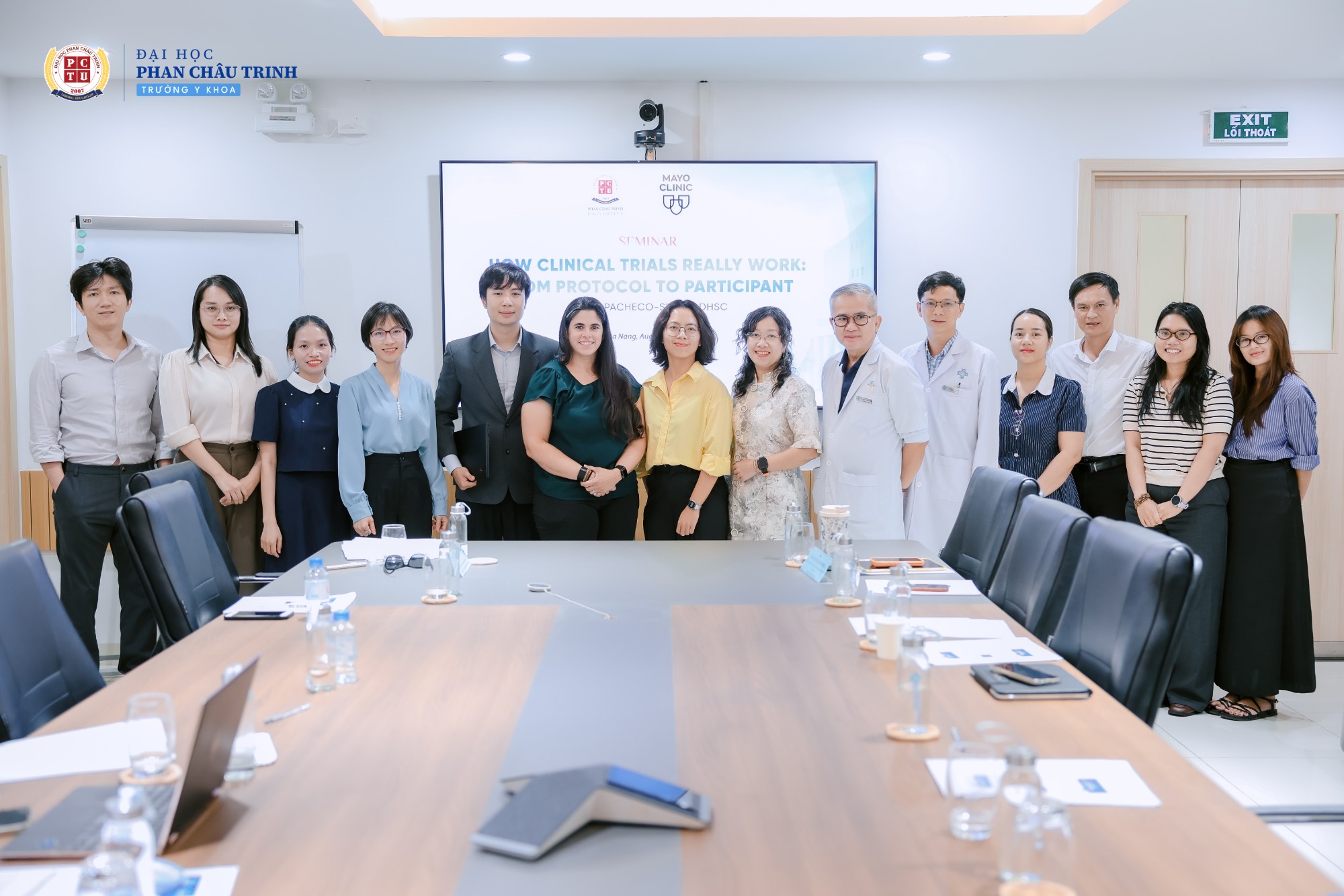
On the afternoon of August 4, Phan Chau Trinh University (PCTU) organized a professional seminar entitled “Fundamental Principles of Clinical Trials,” presented by Dr. Laura M. Pacheco-Spann, DHSc, MS, MSM – Instructor in Epidemiology, Mayo Clinic College of Medicine and Science; Senior Program Coordinator, Department of Quantitative Health Sciences, Mayo Clinic (USA).
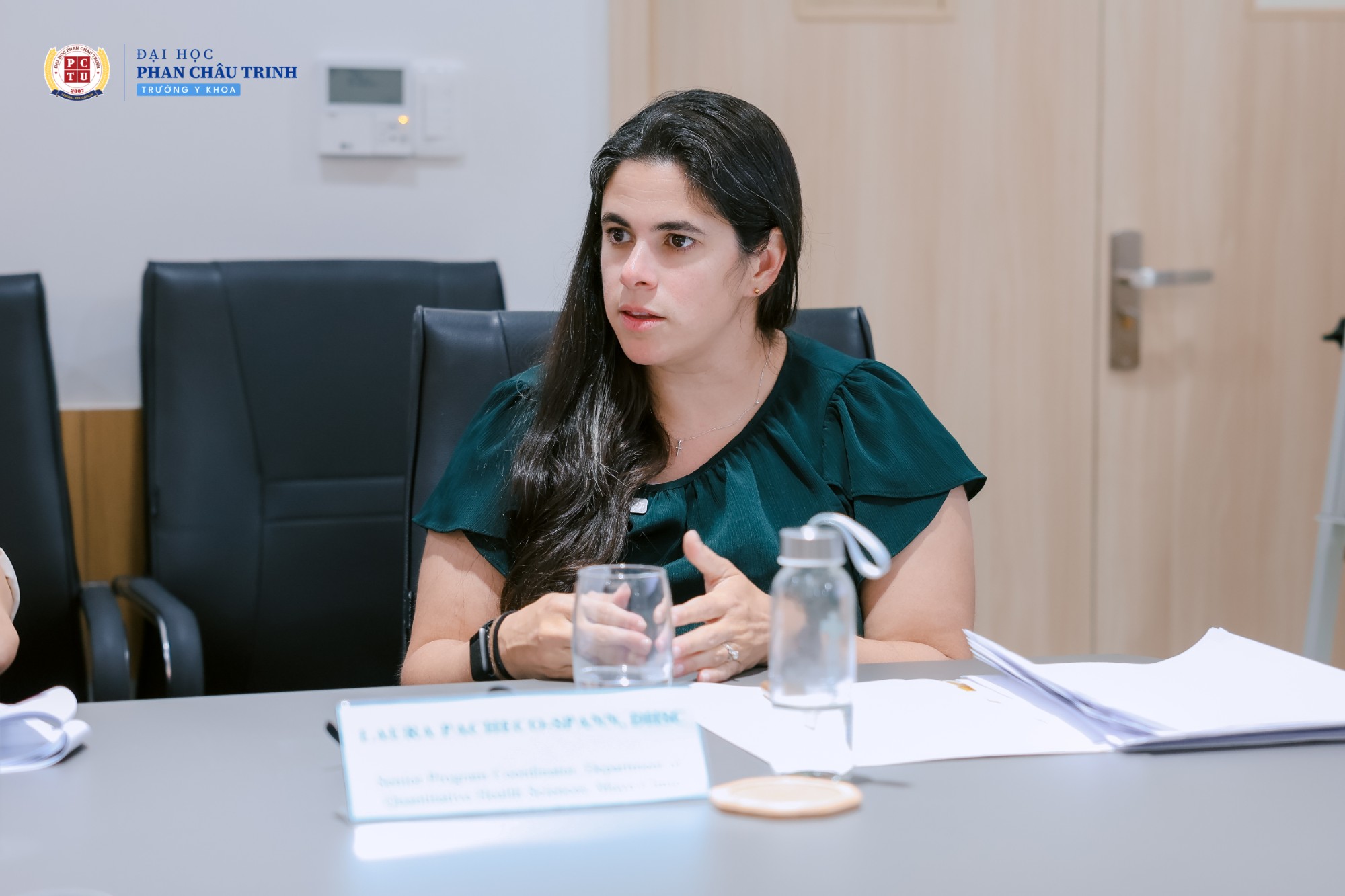
Dr. Laura M. Pacheco-Spann during her presentation
The seminar focused on the topic “How Clinical Trials Really Work: From Protocol to Participant.” Rather than presenting only the theoretical aspects of research design, Dr. Laura emphasized the gap between a well-written research protocol and the successful implementation of a study in real-world settings.
According to the Mayo Clinic expert, many clinical trials do not fail because of weak scientific ideas, but rather due to issues related to feasibility, participant recruitment, operational processes, quality management, and multidisciplinary coordination. The presentation outlined the entire lifecycle of a clinical trial, from formulating the research question, assessing feasibility, obtaining ethical approval, activating the study site, recruiting participants, and monitoring data to analyzing and publishing the results.
In particular, Dr. Laura shared extensive practical experience from Mayo Clinic regarding common points of failure in clinical research, such as slow participant recruitment, missing data, conflicts between clinical duties and research activities, and bottlenecks in biological sample processing. The real-world scenarios presented demonstrated that research quality depends heavily on operational systems, standardized procedures, staff training, and mechanisms for early problem detection, rather than solely on individual efforts.
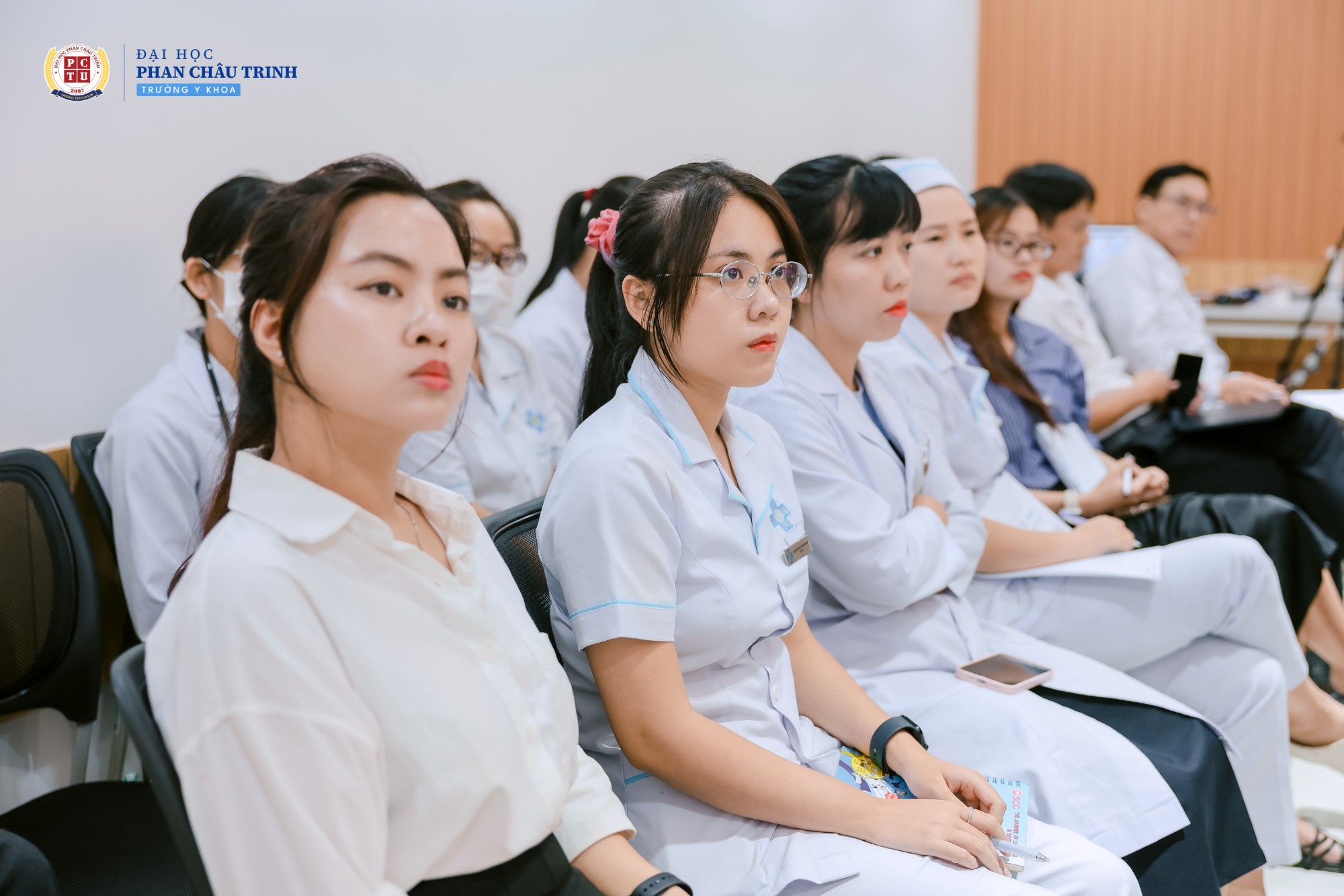
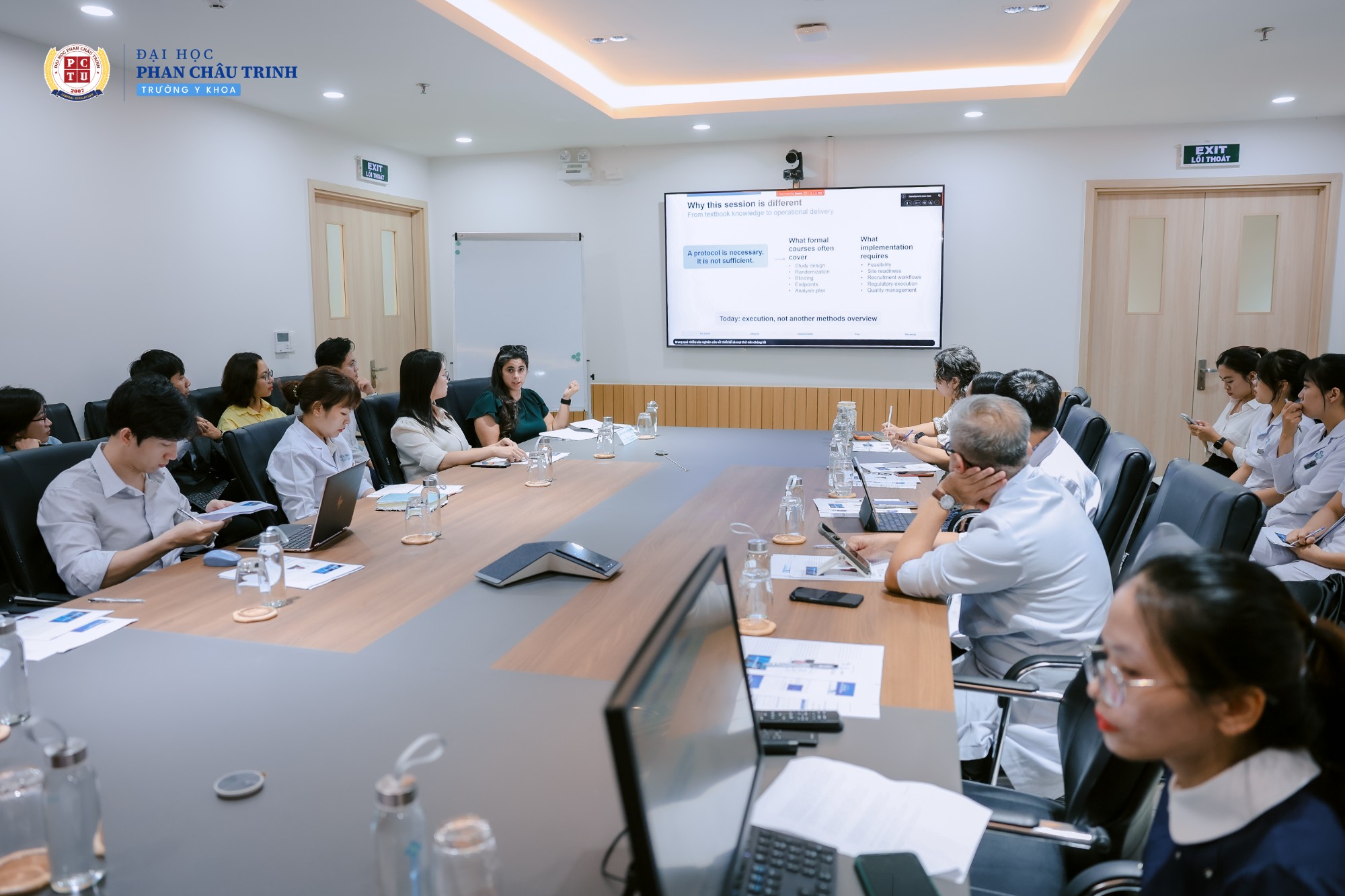
One topic that attracted considerable interest from attendees was viewing research from the participant’s perspective. The Mayo Clinic expert noted that patients do not experience a “research protocol”; rather, they experience the entire real-world journey: registration, waiting, providing informed consent, undergoing tests, attending follow-up visits, and being monitored over time. Therefore, reducing the burden on participants and designing participant-friendly processes are also important strategies for enhancing scientific quality.
The seminar also emphasized the role of research culture in modern medical organizations, where research coordinators, nurses, data staff, laboratory personnel, statisticians, and physicians work together as an integrated system. According to Dr. Laura, “the issue is not whether challenges arise in research, but how the system responds to those challenges.”
This activity is part of an ongoing series of academic exchanges between PCTU and experts from Mayo Clinic – one of the world’s leading medical systems in patient care, education, and research.
Other news
- A new academic year begins with values carried forward ( 08:03 - 12/09/2026 )
- Exploring clinical placement opportunities in Australia with Bond University for PCTU medical students ( 09:29 - 27/08/2026 )
- Two research centers – one shared vision in regenerative medicine ( 09:13 - 27/08/2026 )
- Continue collaborating with Bond University to expand the clinical internship network. ( 08:37 - 27/08/2026 )
- Continue training faculty members of the Institute–University on simulation-based teaching methods ( 08:04 - 22/08/2026 )
- Da Nang C hospital connects with PCTU to strengthen professional exchange in hospital–university collaboration ( 09:20 - 21/08/2026 )
- Welcoming Korean students to PCTU for cadaveric anatomy study ( 16:04 - 18/08/2026 )
- CONNECTING SCIENCE, CREATING NEW SOLUTIONS FOR REGENERATIVE MEDICINE ( 08:57 - 18/08/2026 )
- PCTU Discusses AI Applications in Healthcare with AITRICS ( 08:51 - 17/08/2026 )
- PCTU collaborates with Mayo clinic experts – One of the world's leading healthcare systems ( 13:39 - 05/08/2026 )
PHAN CHAU TRINHUNIVERSITY
- 09 Nguyen Gia Thieu street,
Dien Ban Dong ward,
Da Nang city
Phan Chau TrinhUniversity’s Hospital
- 09 Nguyen Gia Thieu street,
Dien Ban Dong ward,
Da Nang city