

Contact Admission
International Collaboration


Academic Exchange in the Field of Regenerative Medicine
On the afternoon of March 28, Phan Chau Trinh University (PCTU) successfully organized the professional seminar “Regenerative Medicine: Stem Cell Technology and Biomaterials.” The event attracted significant interest from research experts, physicians, and students both within and outside the university, opening a space for in-depth discussion on promising research trends and directions for sustainable clinical applications.
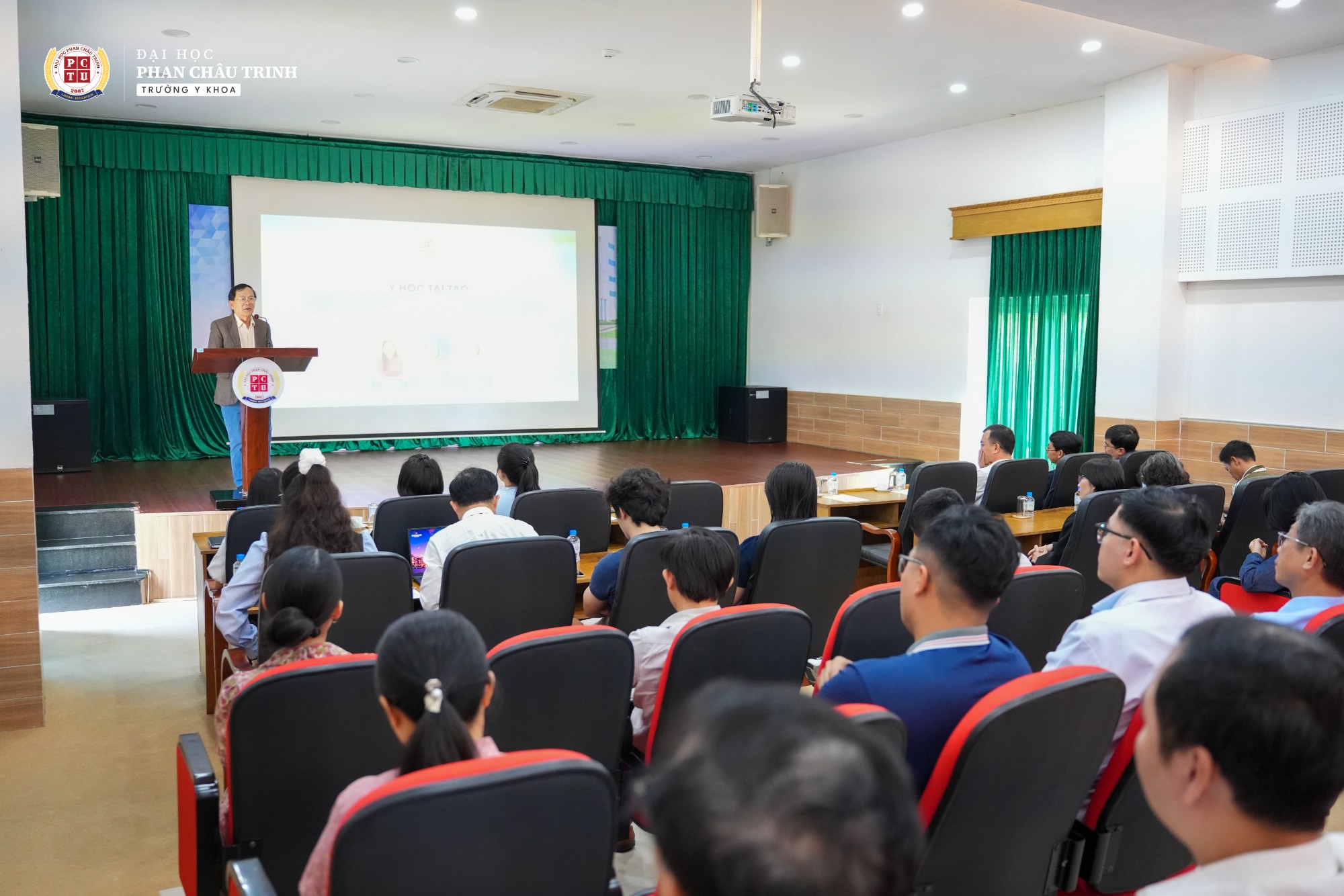
The seminar was honored by the presence and presentations of distinguished scientists, bringing multidimensional perspectives from laboratory research to practical production, including:
• Assoc. Prof. Dr. Nguyen Thi Hiep – Dean of the Faculty of Biomedical Engineering, International University (Vietnam National University, Ho Chi Minh City).
• Assoc. Prof. Dr. Vu Bich Ngoc – Stem Cell Institute, University of Science (Vietnam National University, Ho Chi Minh City).
• Dr. Le Thi Hien – Biomedical Research and Application Center (BMRAc), Phan Chau Trinh University.
Throughout the seminar, the presentations focused on clarifying three contemporary themes in regenerative medicine:
- Biomaterials: The “scaffold” for life. Updated the latest advances in developing highly biocompatible biomaterials. Beyond merely serving as substitutes, modern biomaterials are now designed to interact intelligently with the body, supporting the natural regeneration of tissues and organs.
- Stem cell technology: The shift and expansion of application space. The discussion session highlighted the transition from fundamental research to optimizing therapeutic effectiveness. Understanding the biological mechanisms and the “shifts” in technology provided participants with a comprehensive view of the immense potential of stem cells in addressing severe diseases.
- Exosomes and Cell-free Therapy. Harnessing exosomes derived from stem cells to regulate the tissue microenvironment opens a new direction in regenerative medicine: less invasive, safer, while still ensuring outstanding functional recovery.
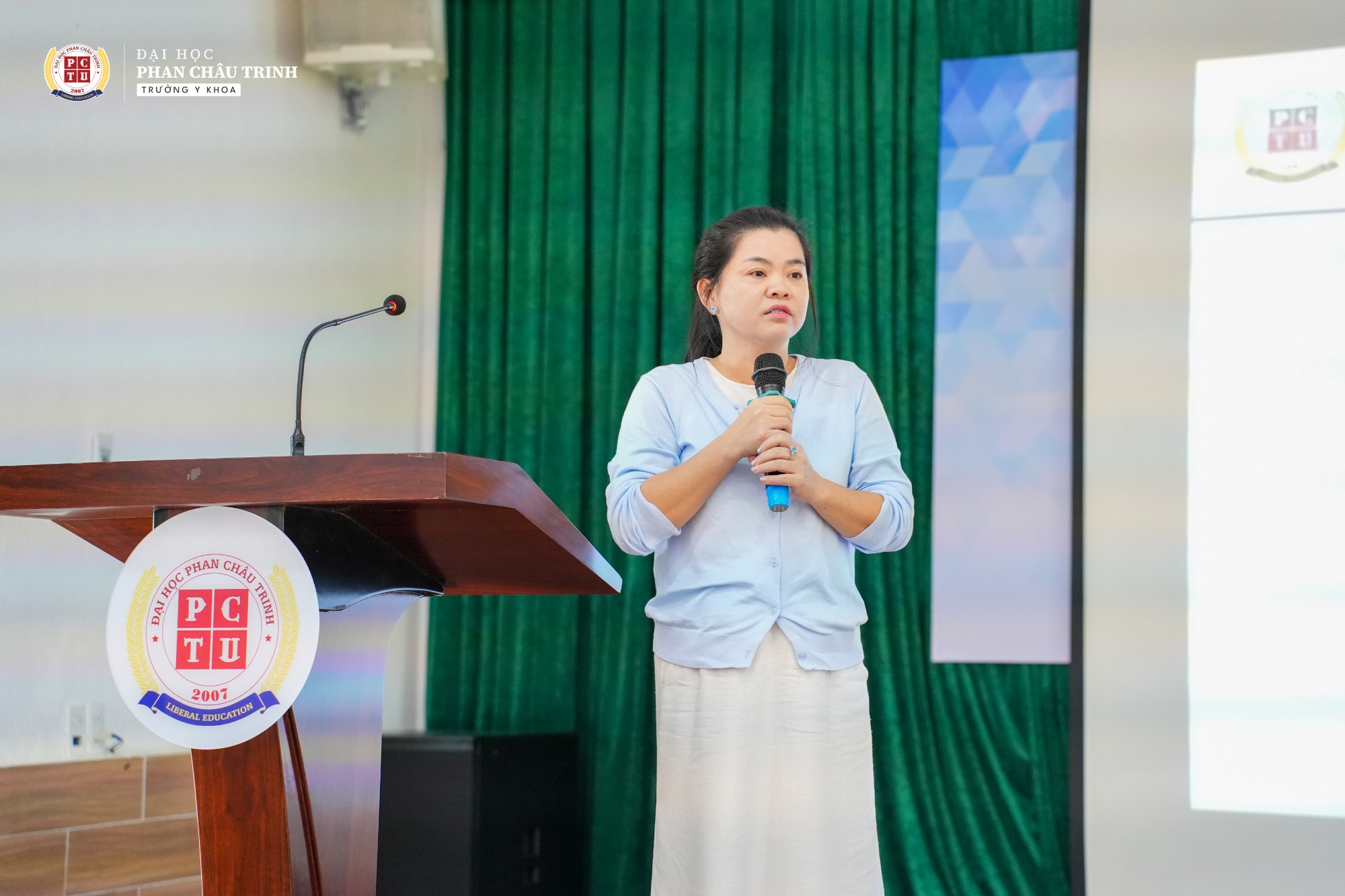
Assoc. Prof. Dr. Nguyen Thi Hiep – Dean of the Faculty of Biomedical Engineering, International University (Vietnam National University, Ho Chi Minh City) during her presentation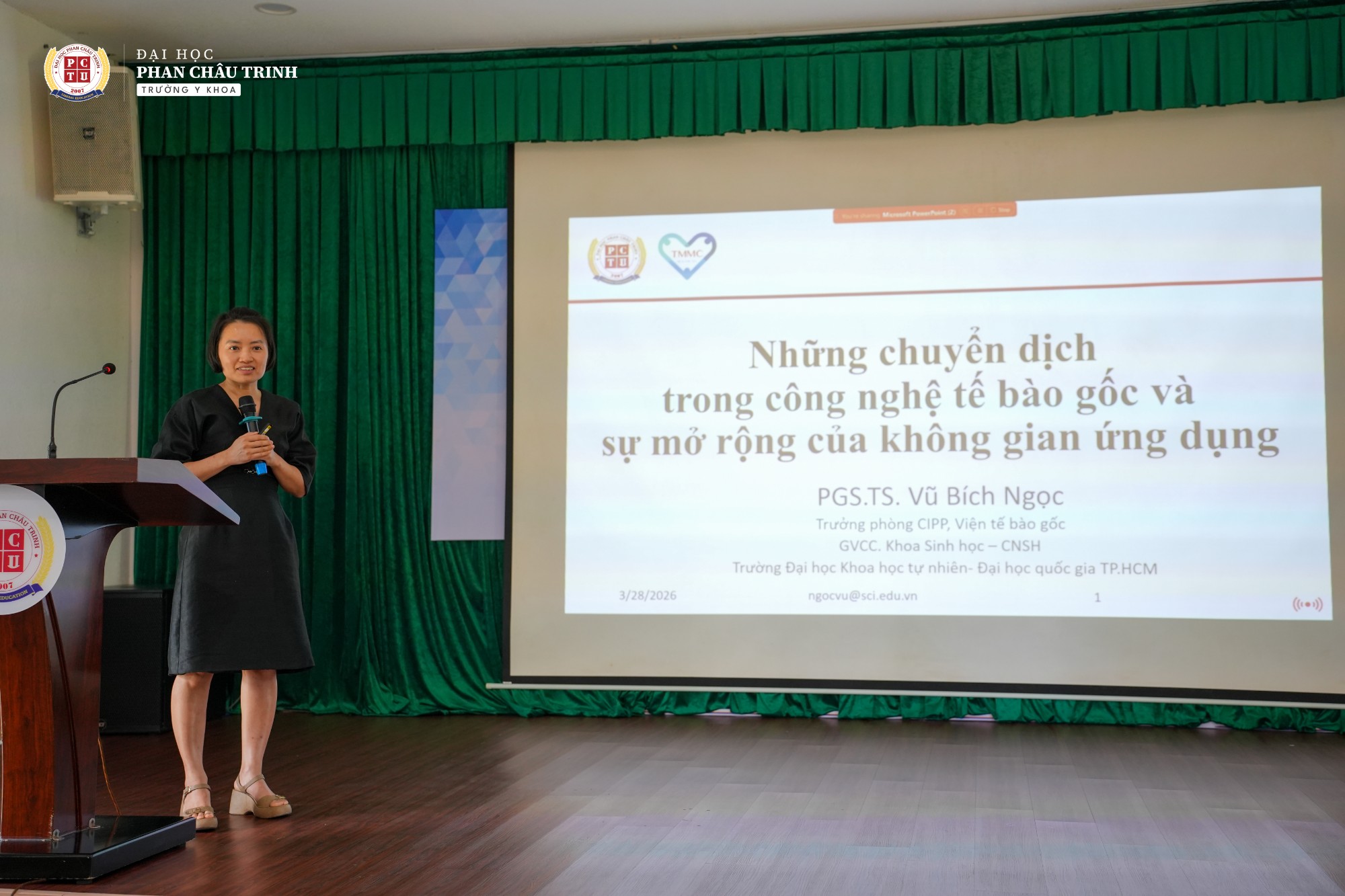
Assoc. Prof. Dr. Vu Bich Ngoc – Stem Cell Institute, University of Science (Vietnam National University, Ho Chi Minh City) during her presentation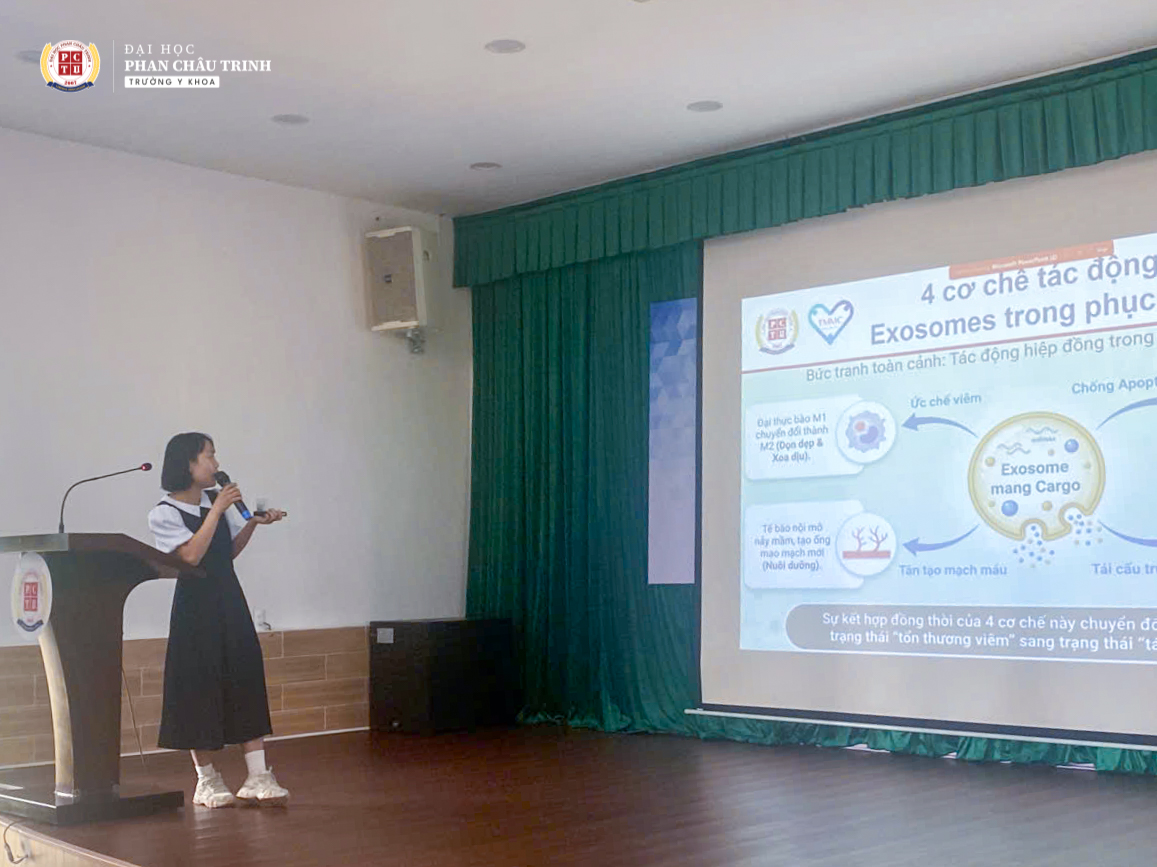
Dr. Le Thi Hien – Biomedical Research and Application Center (BMRAc), Phan Chau Trinh University during her presentation
This seminar was clear evidence of Phan Chau Trinh University’s strategic orientation in effectively operating the Biomedical Research and Application Center (BMRAc). This is precisely the important “ecosystem” to promote technology transfer, bringing achievements in stem cells and biomaterials from the laboratory directly to the patient bedside and into the university’s medical training programs.
The seminar concluded with confidence in a new era of medicine, where minimally invasive solutions with high biocompatibility will become the standard, contributing to improving the quality of life for the community.
Other news
- Patients satisfied with minimally invasive treatment ( 13:35 - 15/09/2026 )
- A new academic year begins with values carried forward ( 08:03 - 12/09/2026 )
- Exploring clinical placement opportunities in Australia with Bond University for PCTU medical students ( 09:29 - 27/08/2026 )
- Two research centers – one shared vision in regenerative medicine ( 09:13 - 27/08/2026 )
- Continue collaborating with Bond University to expand the clinical internship network. ( 08:37 - 27/08/2026 )
- Continue training faculty members of the Institute–University on simulation-based teaching methods ( 08:04 - 22/08/2026 )
- Da Nang C hospital connects with PCTU to strengthen professional exchange in hospital–university collaboration ( 09:20 - 21/08/2026 )
- Welcoming Korean students to PCTU for cadaveric anatomy study ( 16:04 - 18/08/2026 )
- CONNECTING SCIENCE, CREATING NEW SOLUTIONS FOR REGENERATIVE MEDICINE ( 08:57 - 18/08/2026 )
- PCTU Discusses AI Applications in Healthcare with AITRICS ( 08:51 - 17/08/2026 )
PHAN CHAU TRINHUNIVERSITY
- 09 Nguyen Gia Thieu street,
Dien Ban Dong ward,
Da Nang city
Phan Chau TrinhUniversity’s Hospital
- 09 Nguyen Gia Thieu street,
Dien Ban Dong ward,
Da Nang city