



Contact Admission
International Collaboration




Russian mother with Rh(-) blood type successfully delivers at Phan Chau Trinh University of Medicine Hospital
Recently, the Department of Obstetrics and Gynecology – Phan Chau Trinh University of Medicine Hospital successfully monitored and supported the delivery of a Russian patient with Rh(-) blood type, a pregnancy with potential high risks due to possible maternal–fetal blood group incompatibility.
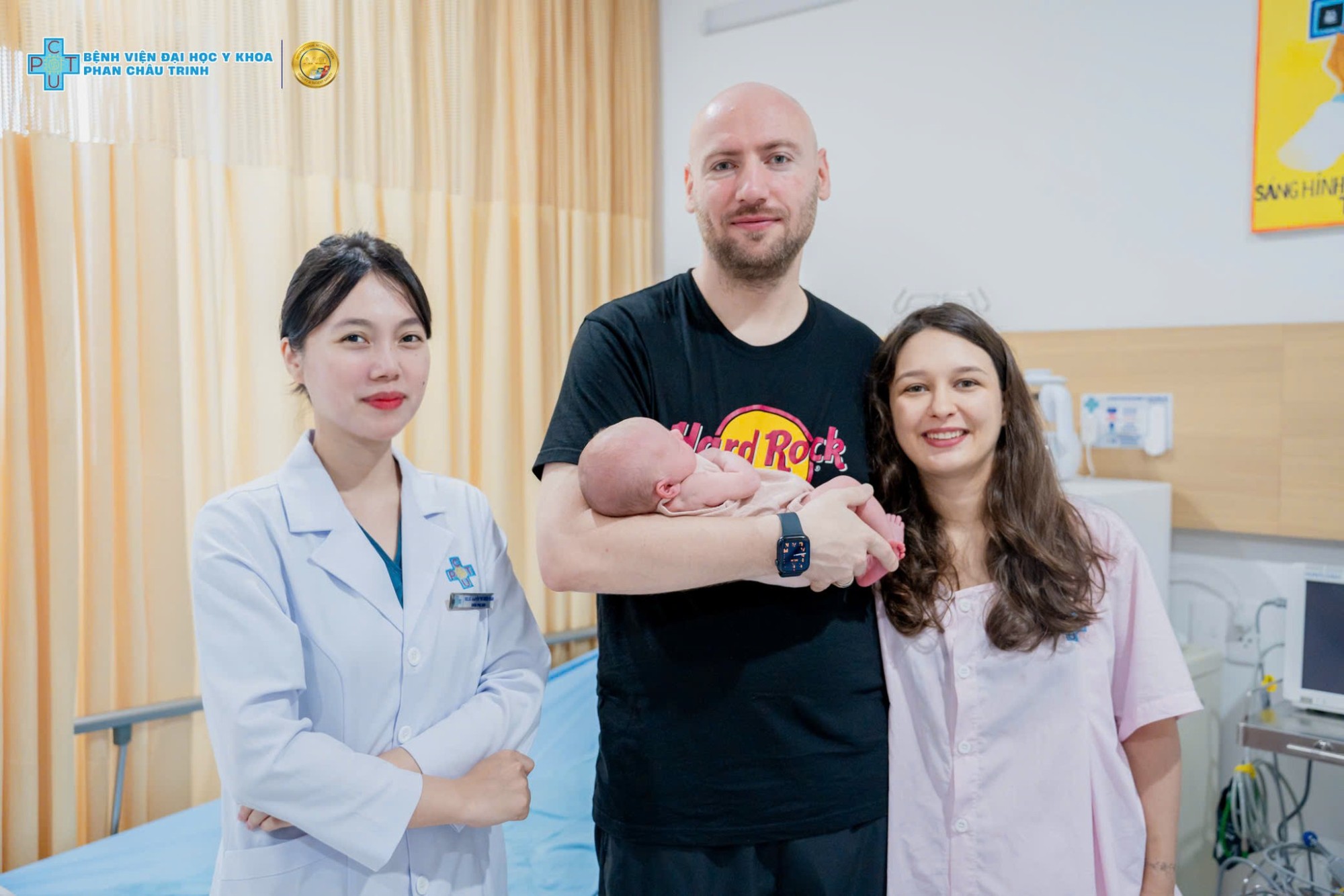
Notably, the patient did not arrive in an emergency situation but proactively chose the hospital for prenatal care and registered for a full maternity package early on. With the Rh(-) factor, the entire pregnancy was closely managed according to protocol to control risks from the beginning.
Upon admission, the patient underwent a comprehensive assessment of obstetric history, completed all necessary tests, and received a proactive monitoring plan. The risk of immune sensitization—a key factor in Rh(-) pregnancies—was controlled through periodic antibody screening and timely Anti-D prophylaxis.
Throughout the monitoring and labor process, both mother and baby were continuously observed, with intervention plans always ready through close coordination between clinical and paraclinical teams. The delivery was safe, the baby was born healthy with no Rh incompatibility-related complications, and the mother recovered well postpartum.
In obstetrics, Rh(-) blood type is relatively rare but carries significant importance. Without proper monitoring and prevention, Rh incompatibility can lead to hemolysis, fetal anemia, and many serious complications. Therefore, managing pregnancies in this group always requires strict protocols and close supervision.
This case is one of many international patients seeking examination and treatment at Phan Chau Trinh University of Medicine Hospital. Recently, the International Clinic – Premier Clinic has recorded impressive growth in patient numbers, with an increase of approximately 650% in March 2026 compared to December 2025.
This growth reflects the rising demand for high-quality healthcare among the international community in the region, while also affirming the hospital’s reputation and professional capacity in treating foreign patients. It is also the result of outstanding advantages such as reasonable treatment costs, insurance and banking payment guarantee support, and a team with strong professional expertise and foreign language communication skills.
Other news
- Patients satisfied with minimally invasive treatment ( 13:35 - 15/09/2026 )
- A new academic year begins with values carried forward ( 08:03 - 12/09/2026 )
- Exploring clinical placement opportunities in Australia with Bond University for PCTU medical students ( 09:29 - 27/08/2026 )
- Two research centers – one shared vision in regenerative medicine ( 09:13 - 27/08/2026 )
- Continue collaborating with Bond University to expand the clinical internship network. ( 08:37 - 27/08/2026 )
- Continue training faculty members of the Institute–University on simulation-based teaching methods ( 08:04 - 22/08/2026 )
- Da Nang C hospital connects with PCTU to strengthen professional exchange in hospital–university collaboration ( 09:20 - 21/08/2026 )
- Welcoming Korean students to PCTU for cadaveric anatomy study ( 16:04 - 18/08/2026 )
- CONNECTING SCIENCE, CREATING NEW SOLUTIONS FOR REGENERATIVE MEDICINE ( 08:57 - 18/08/2026 )
- PCTU Discusses AI Applications in Healthcare with AITRICS ( 08:51 - 17/08/2026 )
PHAN CHAU TRINHUNIVERSITY
- 09 Nguyen Gia Thieu street,
Dien Ban Dong ward,
Da Nang city
Phan Chau TrinhUniversity’s Hospital
- 09 Nguyen Gia Thieu street,
Dien Ban Dong ward,
Da Nang city