

Contact Admission
International Collaboration



Patients satisfied with minimally invasive treatment
After two years of pain in both shoulders, with many sleepless nights due to worsening pain at night, difficulty lying on either side, raising their arms, and carrying out familiar daily activities, patient P.T.S., 52, sought treatment at Phan Chau Trinh University of Medicine Hospital.
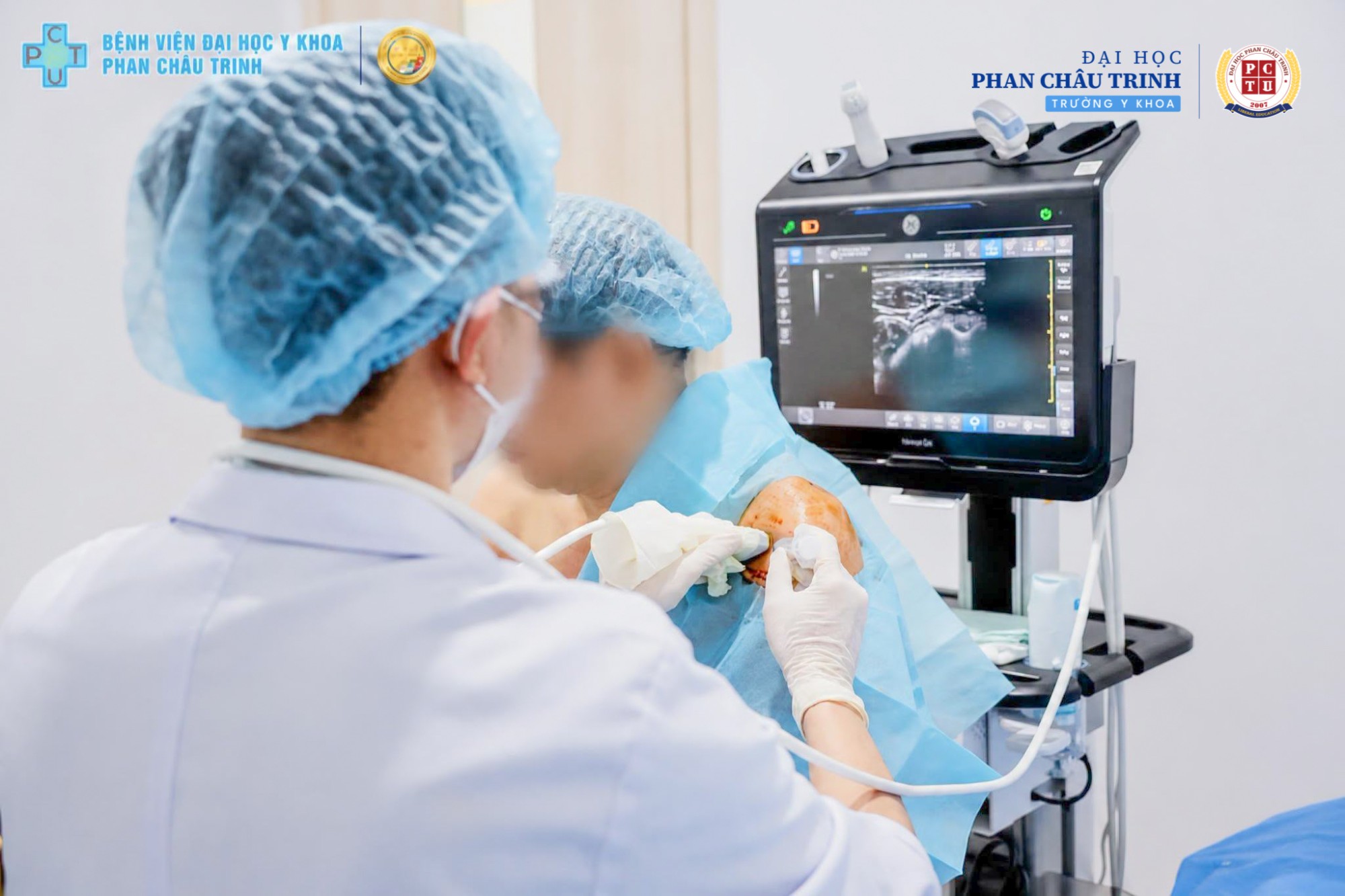
Following examination and assessment, the patient was diagnosed with rotator cuff tendinopathy. Based on the patient's specific condition, Dr. Cao Anh Thai, Specialist Level I – Department of General Surgery, Phan Chau Trinh University of Medicine Hospital, selected platelet-rich plasma (PRP) injection as part of the treatment plan.
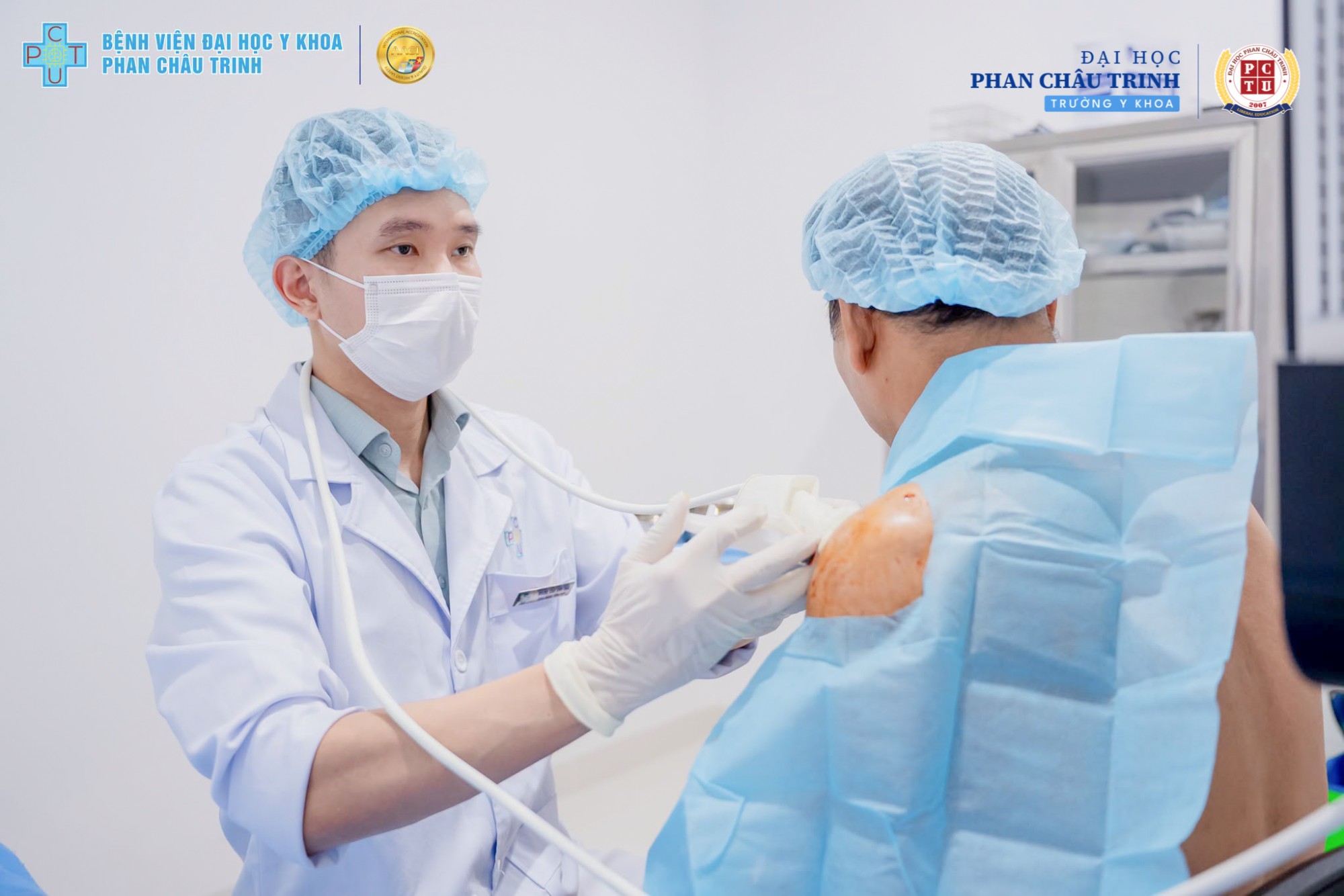
Dr. Cao Anh Thai performs a platelet-rich plasma injection for the patient
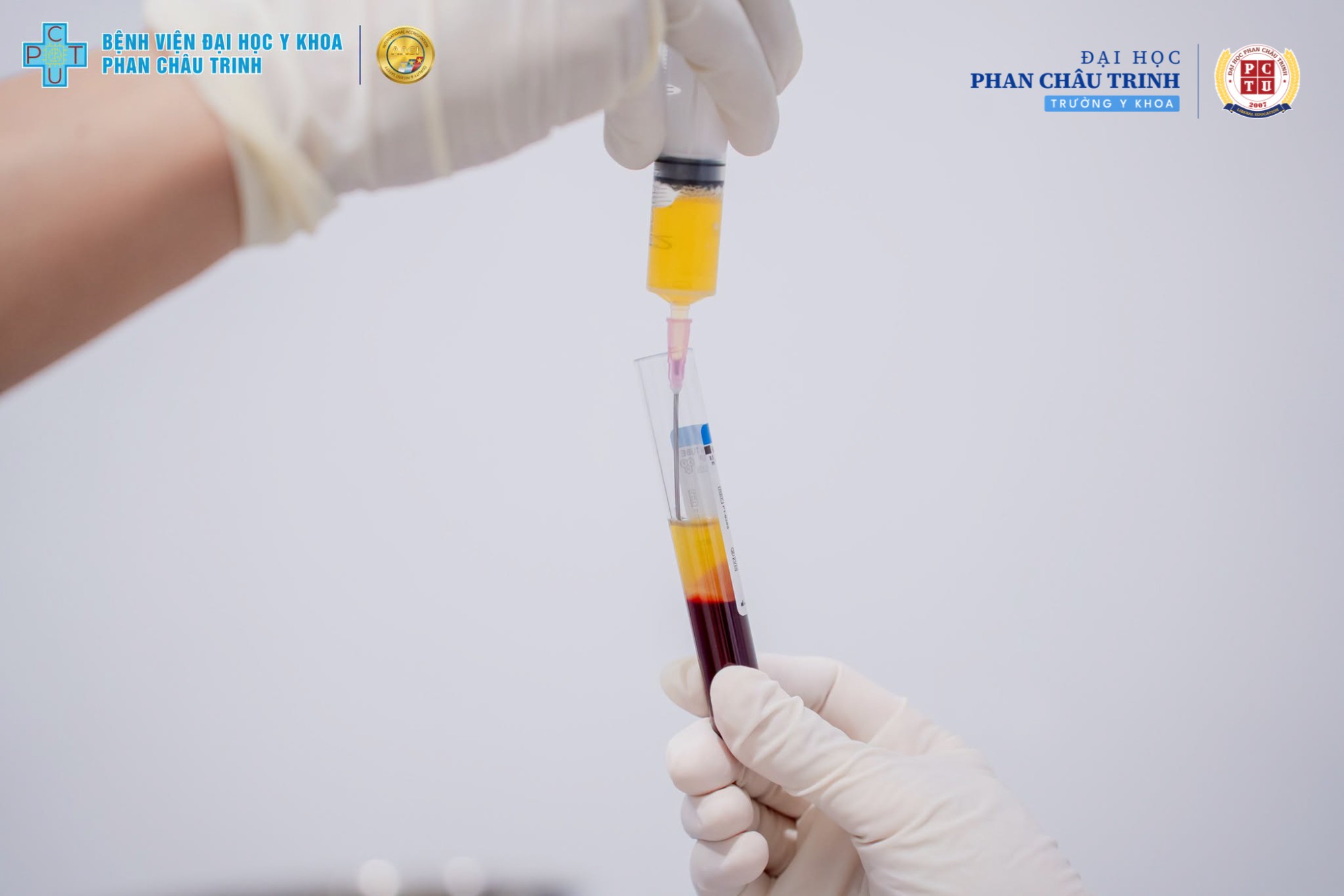
Platelet-rich plasma
PRP is derived from the patient's own blood and contains platelets and growth factors. In selected cases, this method may be considered to help relieve pain and improve function, in combination with rehabilitation and follow-up after treatment.
Following treatment, the patient reported reduced pain, improved shoulder movement, and gradual improvement in daily activities.
At PCTU, the Biomedical and Regenerative Medicine Research Center (BMRAC), together with Newlife Tissue Bank, plays an important role in the development of regenerative medicine. While the Tissue Bank focuses on receiving, processing, and storing tissue/cell sources in accordance with professional procedures, the Regenerative Medicine Unit at the Hospital is where appropriate approaches and techniques are applied in clinical practice based on physicians' indications.
These two components form part of the same ecosystem, creating a connection between tissue and cell resources, biomedical research, and clinical applications.
Building on this foundation, Phan Chau Trinh University of Medicine Hospital is implementing regenerative medicine techniques in several fields.
In musculoskeletal care, methods such as PRP and autologous adipose-derived stem cells are considered in selected cases of joint degeneration and periarticular soft-tissue disorders. In Dermatology, the hospital provides PRP along with various techniques such as CO₂ laser, Fractional laser, liquid nitrogen cryotherapy, microneedling, and other specialized procedures, depending on each patient's condition.
The advantage of the Institute–University model at PCTU lies in its ability to connect multiple resources within a single system: Education at the University → research at specialized centers → tissue and cell resources from the Tissue Bank → clinical application at the Hospital.
This connection enables PCTU to train healthcare professionals, gradually build research capacity, and apply medical advances to real-world healthcare.
Other news
- A new academic year begins with values carried forward ( 08:03 - 12/09/2026 )
- Exploring clinical placement opportunities in Australia with Bond University for PCTU medical students ( 09:29 - 27/08/2026 )
- Two research centers – one shared vision in regenerative medicine ( 09:13 - 27/08/2026 )
- Continue collaborating with Bond University to expand the clinical internship network. ( 08:37 - 27/08/2026 )
- Continue training faculty members of the Institute–University on simulation-based teaching methods ( 08:04 - 22/08/2026 )
- Da Nang C hospital connects with PCTU to strengthen professional exchange in hospital–university collaboration ( 09:20 - 21/08/2026 )
- Welcoming Korean students to PCTU for cadaveric anatomy study ( 16:04 - 18/08/2026 )
- CONNECTING SCIENCE, CREATING NEW SOLUTIONS FOR REGENERATIVE MEDICINE ( 08:57 - 18/08/2026 )
- PCTU Discusses AI Applications in Healthcare with AITRICS ( 08:51 - 17/08/2026 )
- PCTU Explores Mayo Clinic’s Expertise in Conducting Clinical Trials ( 14:30 - 05/08/2026 )
PHAN CHAU TRINHUNIVERSITY
- 09 Nguyen Gia Thieu street,
Dien Ban Dong ward,
Da Nang city
Phan Chau TrinhUniversity’s Hospital
- 09 Nguyen Gia Thieu street,
Dien Ban Dong ward,
Da Nang city