

Contact Admission
International Collaboration


Paths of gratitude on the Phan Chau Trinh Campus
Within the campus of Phan Chau Trinh University, there are small roads that quietly welcome the footsteps of students every day. They may connect lecture halls and hospitals, laboratories and libraries, early morning classes and late-night shifts of medical students.
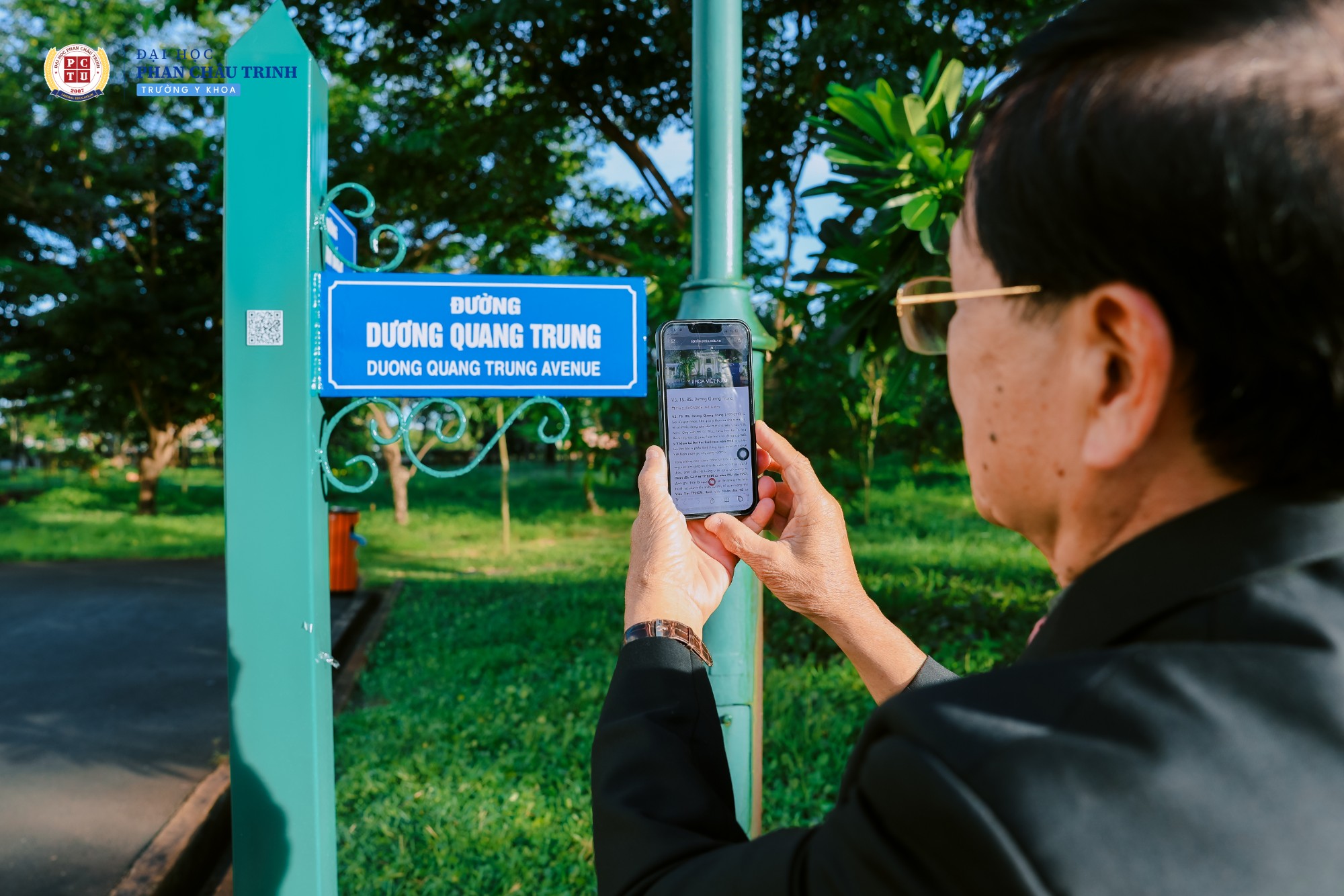
What makes these roads special, however, is not their length or architecture, but the names displayed on each street sign.
They bear the names of educators who devoted their lives to medical education:
- Prof. Dr. Duong Quang Trung
- Prof. Dr. Le Van Bach
- Prof. Le Ba Van
- Prof. Nguyen Van Tu
- Assoc. Prof. Dr. Le Ba Nhan
- Prof. Dr. Le Xuan Cong
These were teachers, physicians, and medical educators who dedicated nearly their entire lives to lecture halls, hospitals, and generations of students. Some laid the foundations for basic medical sciences. Some preserved academic standards through challenging and transformative periods. Others trained generations of physicians, professors, and healthcare experts who now work throughout Vietnam and around the world.
For many generations of doctors, they are more than names in the history of medicine. They are cherished memories of student life.
They were the professors standing at the lectern with calm yet authoritative voices. They were the physicians quietly walking hospital corridors late at night. They taught students not only how to read medical records, but also how to bow before a patient’s suffering with kindness and compassion.
Some of these teachers have passed away.
Yet their presence remains in every classroom, every hospital, and every generation of physicians who continue to heal patients and teach those who follow.
Many lecturers and physicians within the Phan Chau Trinh Institute–University system today were once students of these very teachers. They sat in the old lecture halls of Hue Medical School, where they received their first lessons in anatomy, physiology, clinical medicine, and the ethics of being a physician.
Some lectures have endured for decades.
Some words of advice from these teachers are still repeated today in on-call rooms, morning briefings, and discussions of difficult clinical cases.
Perhaps that is why PCTU chose a particularly meaningful way to express its gratitude: naming the campus roads after distinguished medical educators.
Not merely as directions on a map, but as a way to preserve part of the history of medical education in Central Vietnam within the learning environment of today’s students.
So that every day, as students walk these roads, they understand that medicine is built not only upon knowledge and clinical skills. It is also built upon dedication, service, gratitude, and the responsibility to carry forward the values that previous generations devoted their lives to nurturing.
A first-year student may not yet know the life stories of Prof. Dr. Le Van Bach or Prof. Le Ba Van, but one day they may stop before a road sign and ask:
“Who is the person whose name is on this road?”
And from that simple question, the great stories of the medical profession begin to unfold. They are stories of individuals who lived through war, hardship, and profound social change, yet remained steadfast in their commitment to saving lives and educating future generations of physicians.
They are stories of educators who upheld rigorous academic standards while remaining deeply devoted to their students.
They are stories of a generation that quietly laid the foundations of medical education in Central Vietnam through knowledge, integrity, and selfless dedication.
At many universities around the world, buildings and roads are named after scholars as a way of preserving an institution’s intellectual heritage. At PCTU, these commemorative roads are gradually becoming part of the university’s unique identity, where learning spaces are connected with history, tradition, and the cultural depth of the medical profession.
Every day, students continue to walk these roads on their way to classes, hospitals, and practical training sessions.
Perhaps today they do not fully appreciate the significance of these names.
But in time, when they put on the white coat and truly embark upon the journey of caring for others, they will understand that they are continuing along a path first opened by countless physicians who came before them.
On the afternoon of June 8, during the road-naming ceremony for the internal streets of Phan Chau Trinh University, the coverings were removed from the road signs in the presence of lecturers, staff, and students of the Institute–University system. It was more than a simple naming ceremony; it was a tribute to the educators who helped build the foundations of medical education in Vietnam.
Through these roads named after distinguished teachers, the University hopes to remind every student of the traditions of the medical profession, the importance of gratitude toward previous generations, and the responsibility to continue the values they left behind.
And perhaps the most beautiful thing about the roads on the Phan Chau Trinh campus is this:
The teachers of yesterday are still present here, quietly accompanying today’s medical students in a way that is subtle yet enduring enough to inspire generations to come.
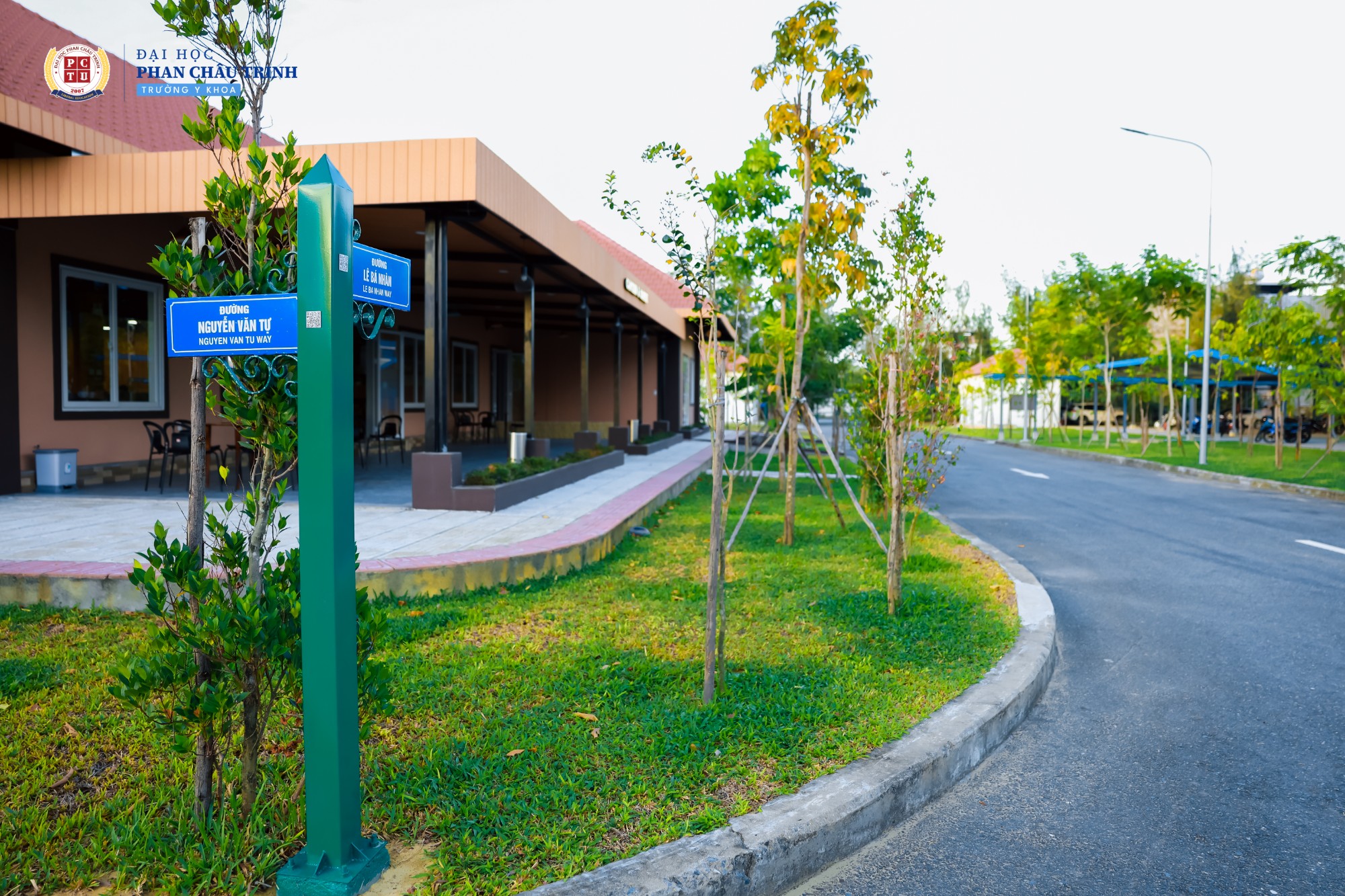
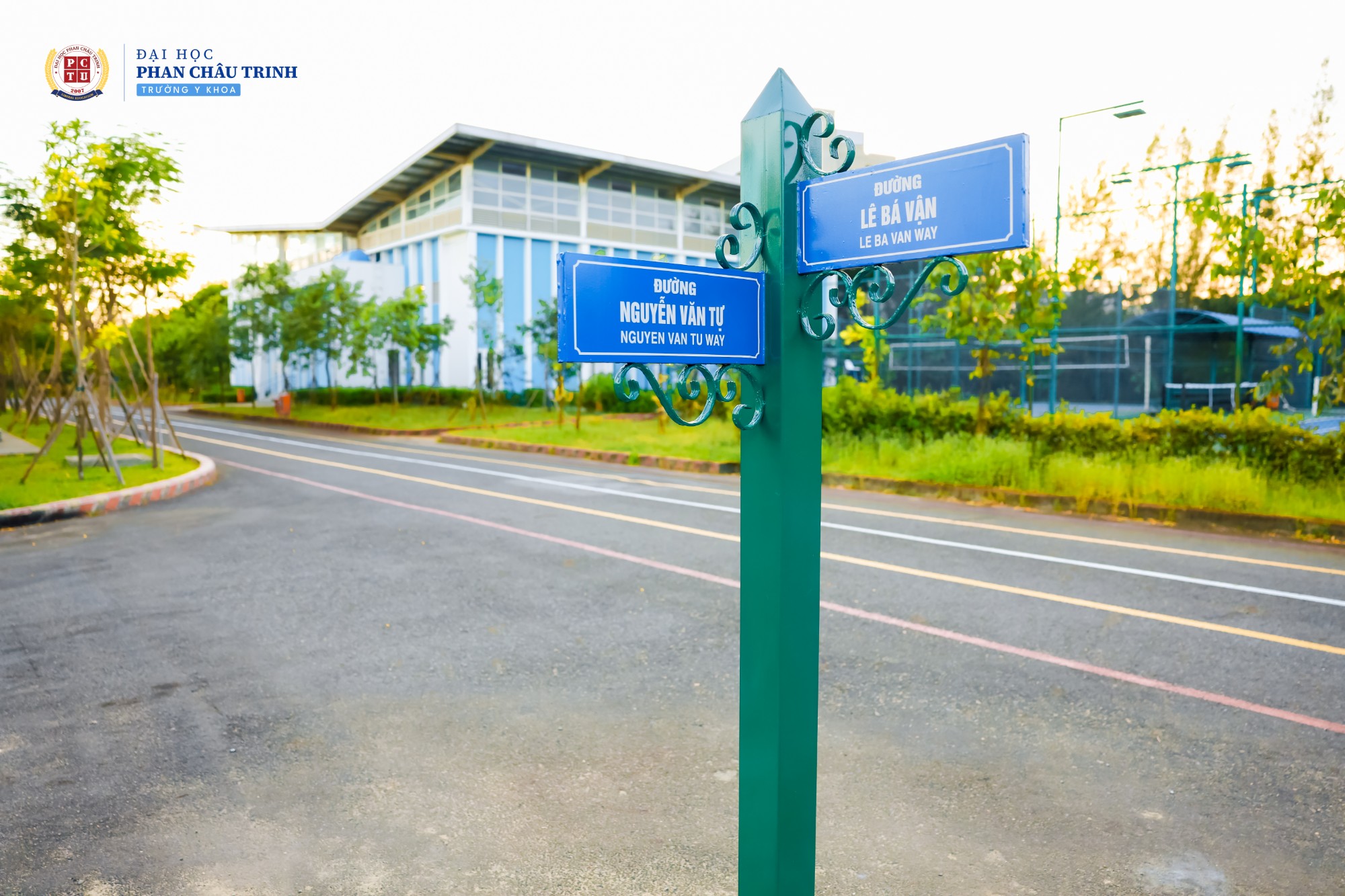
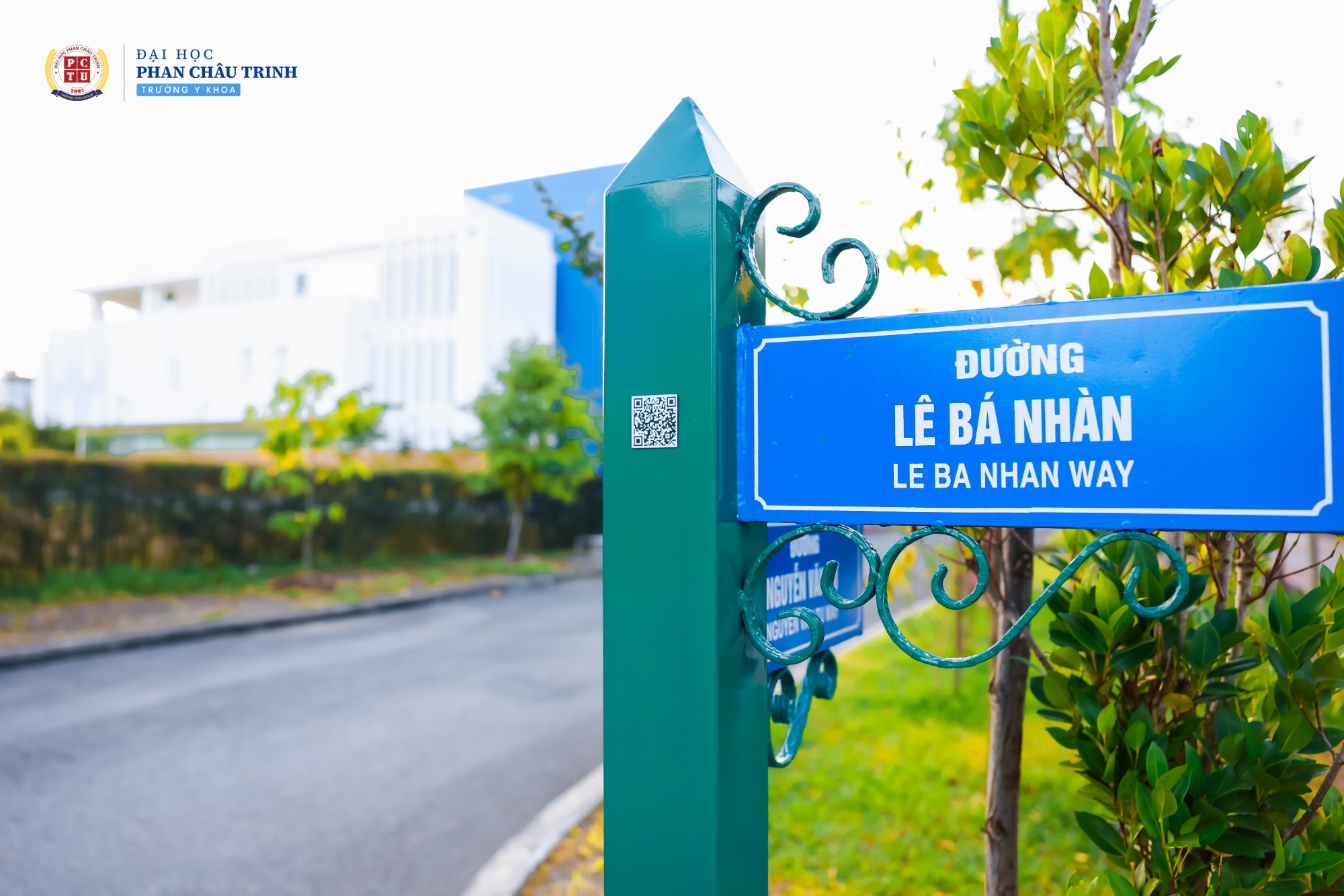
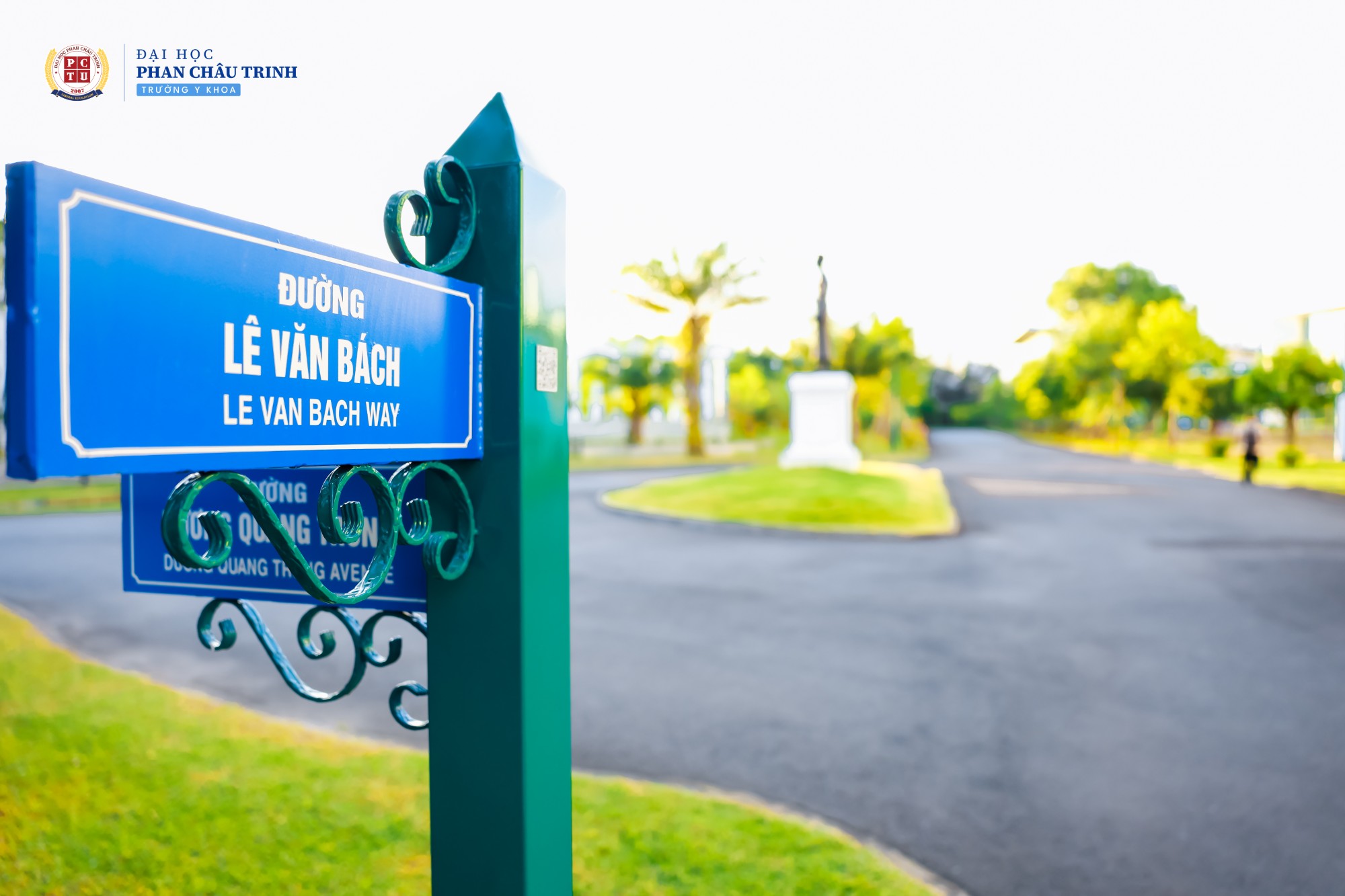
Road signs at the Phan Chau Trinh Campus
Other news
- Patients satisfied with minimally invasive treatment ( 13:35 - 15/09/2026 )
- A new academic year begins with values carried forward ( 08:03 - 12/09/2026 )
- Exploring clinical placement opportunities in Australia with Bond University for PCTU medical students ( 09:29 - 27/08/2026 )
- Two research centers – one shared vision in regenerative medicine ( 09:13 - 27/08/2026 )
- Continue collaborating with Bond University to expand the clinical internship network. ( 08:37 - 27/08/2026 )
- Continue training faculty members of the Institute–University on simulation-based teaching methods ( 08:04 - 22/08/2026 )
- Da Nang C hospital connects with PCTU to strengthen professional exchange in hospital–university collaboration ( 09:20 - 21/08/2026 )
- Welcoming Korean students to PCTU for cadaveric anatomy study ( 16:04 - 18/08/2026 )
- CONNECTING SCIENCE, CREATING NEW SOLUTIONS FOR REGENERATIVE MEDICINE ( 08:57 - 18/08/2026 )
- PCTU Discusses AI Applications in Healthcare with AITRICS ( 08:51 - 17/08/2026 )
PHAN CHAU TRINHUNIVERSITY
- 09 Nguyen Gia Thieu street,
Dien Ban Dong ward,
Da Nang city
Phan Chau TrinhUniversity’s Hospital
- 09 Nguyen Gia Thieu street,
Dien Ban Dong ward,
Da Nang city