


Contact Admission
International Collaboration



The demand for “mental rebuilding” is increasing, while human resources remain insufficient.
At the end of the year, instead of focusing only on work reviews or financial plans, many young people are choosing to care for their mental well-being. They seek out psychologists to reflect on themselves, ease pressure, and prepare emotionally for the year ahead. This is not always because of major life events, but often due to long-term exhaustion, anxiety, insomnia, and the fear of falling behind. These emotional states are becoming increasingly common among young people in today’s fast-paced modern life.
Invisible pressures weighing on young people
According to the World Mental Health Report 2022 by the World Health Organization (WHO), 1 in every 8 people worldwide experiences a mental health condition, with young people being increasingly affected. About 50% of mental health conditions begin before the age of 14, yet many are not detected or supported early.
A 2023 study by the University of Queensland (Australia) and Harvard Medical School (USA) found that most common mental health conditions begin between the ages of 15 and 20—a period when many young people are studying, starting careers, and facing strong pressure to prove themselves.
In Vietnam, UNICEF reports that around 20% of children and adolescents experience mental health challenges, while access to professional mental health services remains limited. Among young adults, work pressure, social comparison, and the demands of digital life have made mental burnout increasingly common.
Records from counseling and psychotherapy centers in Ho Chi Minh City and other major cities show a rise in young people aged 22–35 seeking support toward the end of the year. The main reasons include work exhaustion, constant self-comparison, sleep disorders, and difficulty balancing work and personal life. Counseling sessions help young people recognize their emotions and learn healthier ways to cope with pressure, rather than trying to “erase” their difficulties.

Image source: AI
High demand, limited supply
According to reports from Vietnam’s Ministry of Health, millions of people are living with mental disorders, while the number of well-trained clinical psychologists and psychotherapists remains very limited.
Surveys also show that mental health services are mainly concentrated at central and provincial levels. At district and community levels, care is often limited to managing severe mental illnesses, while many common mental health conditions do not receive adequate professional support.
Despite rapidly growing demand, the mental health workforce in Vietnam—especially in clinical psychology and counseling—is still insufficient and uneven in quality. WHO recommends that countries develop mental health care systems based on professionally trained specialists, with strong scientific foundations, ethical standards, and proper clinical practice.
In reality, many people currently working as “psychological counselors” come from related fields, lack formal training, and operate without long-term professional supervision—posing potential risks to those seeking help.
Clinical-oriented psychology as a growing career trend
From this reality, several universities have begun to focus on developing psychology programs with a clinical and counseling orientation, aiming to meet the increasingly clear needs of society.
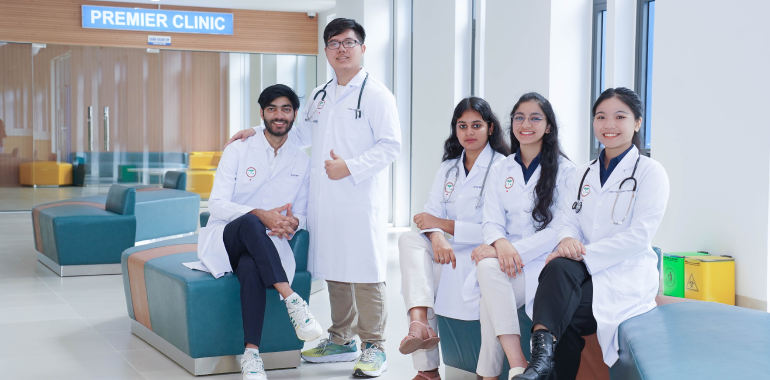
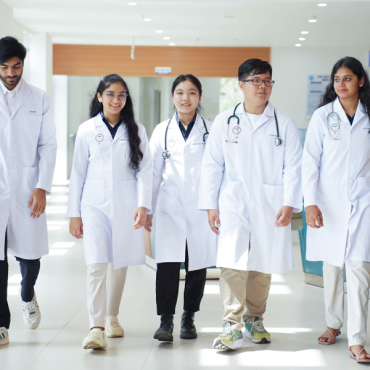
Among them, Phan Chau Trinh University (PCTU)—a university with strong foundations in health sciences—has implemented a clinical and counseling-oriented psychology program, aiming to train professionals with solid scientific knowledge, practical skills, and a multidisciplinary health-care approach.
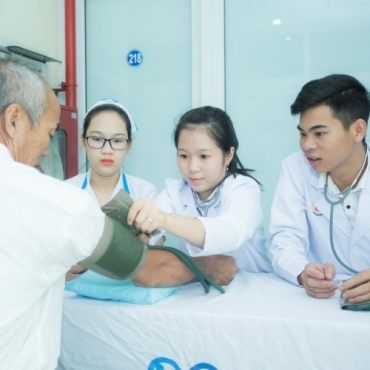
With access to a system of nine teaching hospitals and a pre-clinical simulation hospital, psychology students at PCTU are exposed early to medical environments and real-life scenarios in a safe setting before participating in mental health support at healthcare facilities.
The curriculum focuses on modern psychology, adolescent developmental psychology, psychopathology, and core counseling skills. This approach helps students understand human beings through the psychological – biological – social model, rather than viewing mental health issues in isolation.
Integrating psychology education with medical environments not only improves workforce quality, but is also a necessary step toward building a sustainable mental health care system, especially for adolescents and young people—groups that WHO identifies as priorities for early intervention.
For furthur information:
- Programs
- Tuition and Fees
- How to Apply
- Facilities
- Activities & Experiences
- Student Life
- Follow us on Facebook
Contact us:
Admission Office:
- Mr. Nguyen Van Minh - Admission Office – Phan Chau Trinh University
- Address: 09 Nguyen Gia Thieu street, Dien Ban Dong ward - Da Nang city
- Tel: (+84235) 3 757 959 or +84.0981.559.255
- WhatsApp Number: +84.0981.559.255 or +84.0962.553.155
- Email: tuyensinh@pctu.edu.vn
- Fanpage: www.facebook.com/daihocphanchautrinh
Other admissions
- Hospital Management: Don’t Let Doubt Cost You an Opportunity ( 13:36 - 01/08/2026 )
- Hospital Management: A Degree That Creates Lasting Value ( 16:18 - 13/07/2026 )
- Dental Nursing: A Profession Dedicated to Healthy, Beautiful Smiles ( 13:28 - 18/06/2026 )
- Exploring Clinical Psychology and Psychological Counseling. ( 13:09 - 18/06/2026 )
- What does it take to become one of the 30 dental nursing students at PCTU? ( 09:39 - 09/06/2026 )
- How long does it take to become a professional dental nurse? ( 09:31 - 09/06/2026 )
- Dental Nursing: If you want to go far, Choose the right place to start ( 08:30 - 05/06/2026 )
- As dental technology becomes smarter, what additional skills do dental nurses need? ( 15:39 - 03/06/2026 )
- Behind every confident smile, who stands alongside the dentist? ( 15:33 - 03/06/2026 )
- The workforce gap amid the growth of the dental industry. ( 15:28 - 03/06/2026 )
PHAN CHAU TRINHUNIVERSITY
- 09 Nguyen Gia Thieu street,
Dien Ban Dong ward,
Da Nang city
Phan Chau TrinhUniversity’s Hospital
- 09 Nguyen Gia Thieu street,
Dien Ban Dong ward,
Da Nang city