

Contact Admission
International Collaboration



Medical advances predicted to break through in 2026
The year 2026 is forecast to mark a strong turning point for modern medicine. Numerous scientific analyses and publications from 2025–2026 indicate that medicine is entering a new phase, as many biomedical technologies move beyond basic research and begin generating measurable, evaluable clinical data with real-world applicability.
1. AI applied directly in treatment and healthcare operations
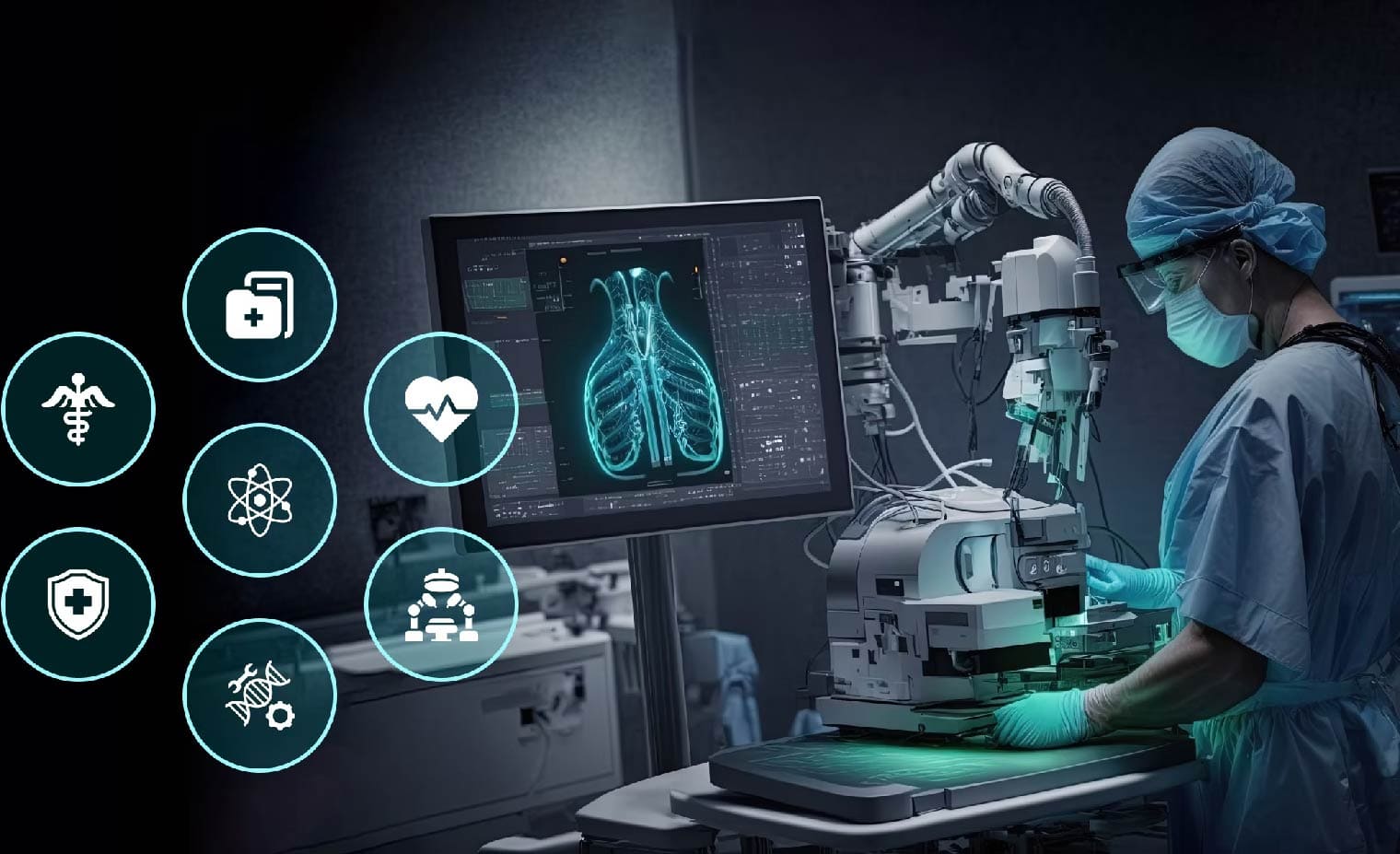
In 2025, AI was already used in drug molecule design, protein structure prediction, and large-scale biological data analysis. According to Nature Medicine and Science, many projects have advanced to the preclinical trial stage with AI-designed molecules. In 2026, the development of more specialized, compact AI models—focused on biological and mathematical reasoning—is expected to enable AI to play a more direct role in scientific discovery, screening processes, and solving specific, well-defined problems with high accuracy.
Clinical AI systems are also expected to move beyond the “hype” phase to become reliable tools in diagnosis, clinical decision support, and real-world patient management, with deeper integration into electronic health records.
2. Genomics-based personalized medicine
Following the successful treatment of a child with a rare metabolic disorder using CRISPR technology in the United States, many research groups are preparing controlled clinical trials for other genetic diseases.
The main approach is “custom-designed therapy,” in which each patient receives a tailored gene-editing treatment plan, improving effectiveness while reducing side effects. At the same time, rapidly declining genome sequencing costs are accelerating the expansion of personalized medicine into oncology, cardiovascular diseases, metabolic disorders, and autoimmune conditions.
3. New drugs and breakthrough therapies
In respiratory medicine, the United States is promoting a “pan-respiratory” strategy that combines prevention for COVID-19, influenza, and RSV. Next-generation vaccines—such as combined COVID–flu vaccines, mRNA flu vaccines, and broad-spectrum coronavirus vaccines—continue to be developed.
In therapeutics, multi-mechanism weight-loss drugs combining GLP-1 and amylin are entering pivotal trials; next-generation CAR-T therapies are being refined to reduce toxicity and expand indications to autoimmune diseases; the biologic drug depemokimab for severe asthma, requiring only two injections per year, has been approved. In Japan, tooth regeneration drugs have also begun human trials.
4. Large-scale cancer screening trials and treatment development
In the United Kingdom, a clinical trial of a blood test capable of detecting more than 50 types of cancer before symptoms appear is expected to release results in 2026. The trial has enrolled over 140,000 participants, and if successful, the tool will be widely implemented across hospitals.
At the same time, cancer drugs are being fast-tracked as both the UK and the US consider streamlined clinical trial processes to accelerate market access.
5. Preventive care and expanded access to community health services
Modern healthcare is shifting its focus toward prevention and routine health monitoring. Many countries are strengthening early screening programs, community-based management of chronic diseases, and primary healthcare. In Vietnam, the Ministry of Health’s orientation is to expand primary healthcare, increase screening coverage, and enhance routine health management through grassroots health facilities, aiming for broader population coverage beyond 2026. This approach helps detect diseases earlier, reduce treatment costs, and ease the burden on tertiary hospitals.
6. Integrated health data for continuous care
Modern healthcare is no longer composed of isolated systems. AI, big data, electronic health records, wearable devices, and telehealth platforms are increasingly integrated into a unified ecosystem. Major healthcare systems such as the NHS are connecting data from hospitals, clinics, home care, and scientific research. This integration enables continuous health monitoring, more accurate clinical decision-making, and global-scale sharing of medical knowledge. Vietnam is also gradually joining this trend through healthcare digital transformation, data standardization, and platform connectivity.
In upcoming articles, Team Ad will explore each topic in greater depth. Follow the fanpage to stay updated on the medical advances predicted to break through in 2026.
Other news
- How Dangerous Is Nipah Virus? Medical Alert and Urgent Health Recommendations ( 14:13 - 27/01/2026 )
- Predicting Disease from Sleep – A New Breakthrough Study ( 14:01 - 13/01/2026 )
- Vietnamese medical miracles in 2025 – inspiration for medical students ( 07:54 - 07/01/2026 )
- Updating the SOFA-2 Score: A New Standard in the Assessment of Multiple Organ Failure After Three Decades ( 10:40 - 31/12/2025 )
- Home AEDs: High Life-Saving Effectiveness, but Not Cost-Effective at Current Prices ( 14:12 - 18/12/2025 )
- Artificial Intelligence and Pediatric Care ( 08:27 - 16/12/2025 )
- Applying Clinical Licensing Principles to Artificial Intelligence ( 09:36 - 08/12/2025 )
- U.S. Approves Targeted Lung Cancer Therapy Datroway ( 08:43 - 25/06/2025 )
- Therapeutic potential and mechanisms of mesenchymal stem cell-derived exosomes as bioactive materials in tendon–bone healing ( 08:38 - 23/11/2023 )
- Symbol of medicine ( 19:38 - 19/09/2021 )
PHAN CHAU TRINHUNIVERSITY
- 09 Nguyen Gia Thieu street,
Dien Ban Dong ward,
Da Nang city
Phan Chau TrinhUniversity’s Hospital
- 09 Nguyen Gia Thieu street,
Dien Ban Dong ward,
Da Nang city