



Contact Admission
International Collaboration




How Dangerous Is Nipah Virus? Medical Alert and Urgent Health Recommendations
In January 2026, the global infectious disease surveillance system placed West Bengal (India) at the highest alert level following a new Nipah virus (NiV) outbreak detected in Kolkata. At least five healthcare workers have been confirmed infected, with several in critical condition, and nearly 100 close contacts are under strict quarantine. The case fatality rate of Nipah disease ranges from 40–75%, and in some small outbreaks has reportedly reached even higher levels, according to World Health Organization statistics.
According to Dr. Nguyen Xuan Huong – Head of the Department of Public Health and Director of the Scientific, Technology and Clinical Research Division at PCTU:
“Nipah virus has fruit bats as its natural reservoir, shedding the virus through saliva, urine, and feces; pigs and several other animals may serve as intermediate hosts. The current situation is concerning due to the potential for community spread and nosocomial transmission if infection control measures are not strictly implemented. Globally, although the likelihood of widespread transmission is lower than COVID-19 because the virus primarily spreads through bodily fluids, Nipah remains highly dangerous, requiring strict monitoring of individuals arriving from affected regions and early alerts for suspected cases.”
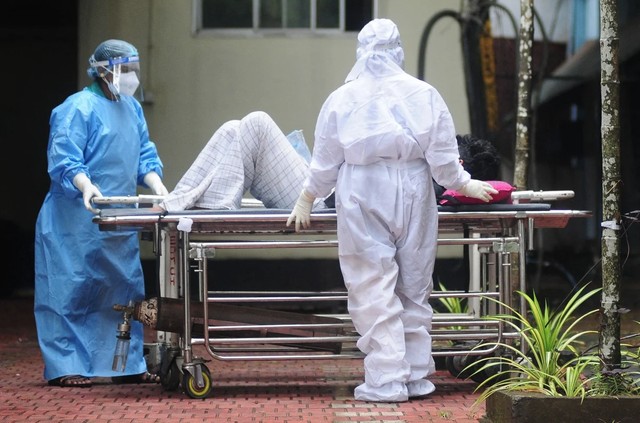
Healthcare personnel follow strict protective procedures while managing a Nipah virus case in Kerala state, India. (Photo: AFP)
For early detection, the community, healthcare workers, and PCTU students should watch for the following symptoms:
- Early stage: high fever, severe headache, fatigue, muscle pain, nausea, sore throat, and dry cough — easily mistaken for common respiratory illness without proper epidemiological assessment. The incubation period is typically 4–14 days.
- Severe stage: acute encephalitis with altered consciousness, seizures, behavioral changes, paralysis, and difficulty speaking. Clinical deterioration can occur rapidly within 24–48 hours, becoming life-threatening. Survivors may experience long-term neurological complications.
If suspicious symptoms appear, especially with relevant exposure history, individuals should seek medical care immediately for evaluation, diagnosis, and appropriate isolation.
As there is currently no specific antiviral treatment, prevention is crucial. High-risk groups include pig farmers, individuals collecting raw date palm sap in affected areas, and frontline healthcare workers.
PCTU recommends:
- Strict adherence to infection prevention and control procedures|
- Proper use of personal protective equipment (PPE) during clinical training
- Avoid eating fruits with signs of animal bites
- Follow the principle of “cook thoroughly, boil water”; do not drink raw sap
- Avoid areas where bats roost
Every individual—especially PCTU students involved in clinical learning and practice—should proactively equip themselves with knowledge, follow protective measures, and report suspicious symptoms immediately. Proactive action today is essential to reducing the risk of community transmission in the near future.
Other news
- Predicting Disease from Sleep – A New Breakthrough Study ( 14:01 - 13/01/2026 )
- Medical advances predicted to break through in 2026 ( 13:54 - 12/01/2026 )
- Vietnamese medical miracles in 2025 – inspiration for medical students ( 07:54 - 07/01/2026 )
- Updating the SOFA-2 Score: A New Standard in the Assessment of Multiple Organ Failure After Three Decades ( 10:40 - 31/12/2025 )
- Home AEDs: High Life-Saving Effectiveness, but Not Cost-Effective at Current Prices ( 14:12 - 18/12/2025 )
- Artificial Intelligence and Pediatric Care ( 08:27 - 16/12/2025 )
- Applying Clinical Licensing Principles to Artificial Intelligence ( 09:36 - 08/12/2025 )
- U.S. Approves Targeted Lung Cancer Therapy Datroway ( 08:43 - 25/06/2025 )
- Therapeutic potential and mechanisms of mesenchymal stem cell-derived exosomes as bioactive materials in tendon–bone healing ( 08:38 - 23/11/2023 )
- Symbol of medicine ( 19:38 - 19/09/2021 )
PHAN CHAU TRINHUNIVERSITY
- 09 Nguyen Gia Thieu street,
Dien Ban Dong ward,
Da Nang city
Phan Chau TrinhUniversity’s Hospital
- 09 Nguyen Gia Thieu street,
Dien Ban Dong ward,
Da Nang city