



Contact Admission
International Collaboration





25 Cancer Warning Signs You Often Ignore
Life-threatening diseases don’t appear overnight — they often progress silently. Cancer can be one of those “quiet” illnesses.
No one suddenly “gets” cancer out of nowhere. It doesn’t abruptly strike people who seem healthy and in their prime. It develops slowly over many years. Common contributing factors may include chronic inflammation, sleepless nights, and emotional exhaustion — and most of us tend to overlook or dismiss those signals.
Dr. Marcus Lee, an oncologist with 20 years of experience, reviewed more than 300 patient records and uncovered one striking truth: Nearly every cancer patient shared the same 25 warning signs long before diagnosis.
These signs don’t always show up on lab results. They are visible and tangible — yet often brushed off as “probably nothing.” The body speaks, but we don’t always listen.
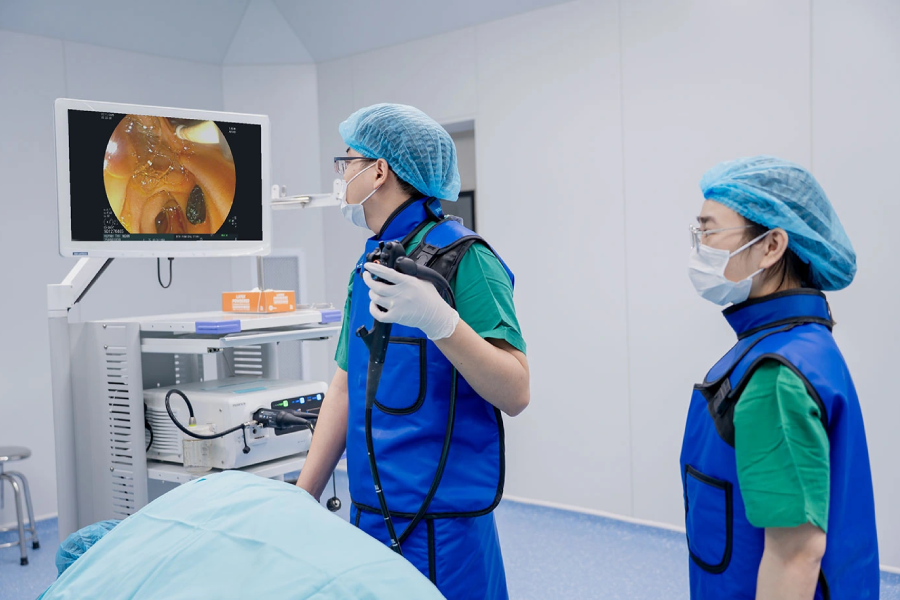
A doctor is performing an endoscopic procedure at Phan Chau Trinh University Hospital.
If you experience three or more of the following warning signs persistently or repeatedly without a clear reason, consider seeing a doctor sooner rather than later. Don’t wait — early cancer detection can significantly improve treatment outcomes:
• — [01] Persistent fatigue even after adequate rest
• — [02] Low-grade fever or night sweats
• — [03] Unexplained weight loss or weight gain
• — [04] Ongoing bloating or persistent abdominal distension
• — [05] Changes in bowel habits lasting longer than 2 weeks
• — [06] Changes in moles or skin pigmentation
• — [07] Chronic inflammation or unexplained pain
• — [08] Persistent cough or hoarseness
• — [09] Frequent infections / slow-healing wounds
• — [10] Unusual bleeding or discharge
• — [11] A sensation of pressure or tightness in a specific area
• — [12] Chronic insomnia
• — [13] Sudden intolerance to certain foods
• — [14] Ongoing digestive problems
• — [15] Headaches or dizziness without a clear cause
• — [16] Feeling full quickly or loss of appetite
• — [17] Emotional numbness or persistent anxiety
• — [18] Weakness in the arms or legs
• — [19] Shortness of breath during mild activity
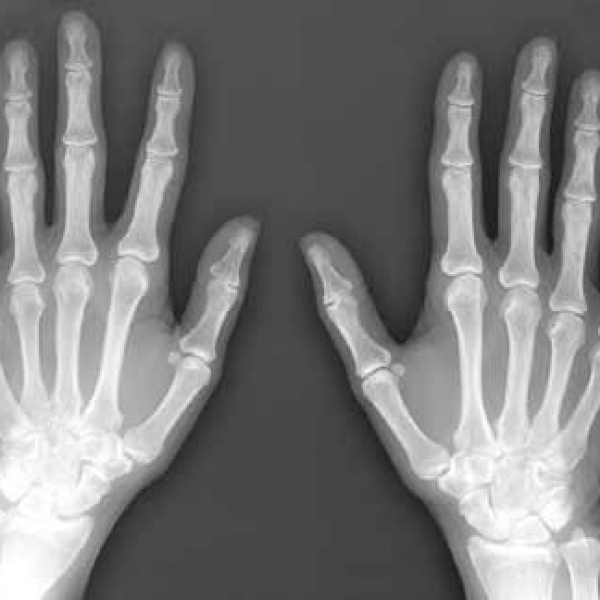
• — [20] Changes in nail shape / fingertip shape
• — [21] Recurrent mouth ulcers
• — [22] Lumps that don’t go away
• — [23] Nighttime back pain
• — [24] Persistent low mood or apathy
• — [25] A gut feeling that “something is off”
At Phan Chau Trinh University Hospital, with the combination of modern diagnostic equipment and an on-site pathology center capable of immediate cell analysis, check-ups and screening can be carried out efficiently, delivering timely and accurate results. Thanks to this, many patients have been detected early and treated at the right time — when cancer is still in a pre-cancerous stage or an early stage — helping improve prognosis and quality of life.
Other news
- Malaria Prevention and Control ( 14:30 - 28/04/2026 )
- Recommended spots for your Da Nang trip ( 13:26 - 13/02/2026 )
- Why is arsenic no longer used in dentistry? ( 14:15 - 29/01/2026 )
- Should you get a tetanus shot if you’re injured while cleaning up after a flood? ( 09:22 - 28/11/2025 )
- 7 Diseases Likely to Spread After Floods – A Family Health Guide ( 14:01 - 25/11/2025 )
- HOW DOES MORNING COFFEE AFFECT GUT HEALTH? ( 08:38 - 15/12/2024 )
- RABIES: CAUSES, PREVENTIVE MEASURES, AND TIMELY TREATMENT ( 14:21 - 08/11/2024 )
- These small but the benefit did not expect help prevent COVID-19 ( 08:44 - 27/04/2021 )
- Foods that help prevent breast cancer ( 08:42 - 27/04/2021 )
- How to recognize and prevent dengue fever ( 09:39 - 22/04/2021 )
PHAN CHAU TRINHUNIVERSITY
- 09 Nguyen Gia Thieu street,
Dien Ban Dong ward,
Da Nang city
Phan Chau TrinhUniversity’s Hospital
- 09 Nguyen Gia Thieu street,
Dien Ban Dong ward,
Da Nang city