


Liên hệ tuyển sinh
Hợp tác Quốc tế


General Medicine

On December 28, 2017, Phan Chau Trinh University (PCTU) was officially authorized by the Ministry of Education and Training of Vietnam to offer the full-time undergraduate program in General Medicine under Decision No. 5838/QĐ-BGDĐT, and began student enrollment in 2018.
The Faculty of Medicine at Phan Chau Trinh University has been comprehensively developed as a medical campus located in the Quang Nam – Da Nang University Village Urban Area, serving as the primary training center for the medical program. The University Council is deeply committed to transforming the image, status, and true value of the medical profession in society. This dedication to high-quality medical education has remained steadfast throughout the university’s development.
Mission, vision, core values, and educational philosophy
+ Mission: To train a generation of medical professionals with a high level of integrity, both in heart and mind.
+ Vision: To develop Phan Chau Trinh University into a Digital Medical University in Vietnam by 2025. Applying artificial intelligence to management, operations, teaching, and learning, bridging the gap between Vietnamese medicine and advanced medical systems worldwide by 2030.
+ Core value: “ The ability to integrate institutions and universities. A place to foster creativity and innovation.”
+ Educational philosophy: "Liberal Education".
Phan Chau Trinh University implements a philosophy of liberal education, helping students unleash their creative energy and connect with nature, proactively explore and acquire knowledge, leading people towards Truth, Goodness, and Beauty.
2.1. General Objectives
The General Practitioner training program at Phan Chau Trinh University aims to train healthcare professionals with a solid foundation in medical and clinical knowledge, professional practice skills, scientific clinical thinking, and a humane attitude; capable of caring for, protecting, and improving the health of the people, meeting the requirements of medical practice and the development of a modern healthcare system, based on a liberal education philosophy and gradually applying biomedical technology and digital technology in medical training and practice.
2.2. Specific Objectives
After 1-3 years of graduation, students achieve the following:
2.2.1. Knowledge
PO1. Deep, broad, and advanced practical and theoretical knowledge, reaching a level of mastery within the scope of medical training, a firm grasp of fundamental principles and theories of medicine, serving as a basis for analysis, interpretation, and professional development.
PO2. Relevant interdisciplinary knowledge, including natural sciences, health sciences, behavioral and social sciences, biomedical technology, and artificial intelligence, serves a holistic and evidence-based approach to healthcare.
PO3. General knowledge of administration and management in the healthcare field, meeting the requirements for participation in professional activities within a modern healthcare system.
2.2.2. Skills
PO4. To develop critical thinking skills, analytical skills, synthesis skills, and the ability to scientifically and progressively evaluate data and information in medical studies, research, and practice.
PO5. Research, development, and innovation skills; ability to select, apply, and utilize appropriate technologies, especially biomedical technology and artificial intelligence, in academic and professional fields.
PO6. Possesses skills in disseminating and popularizing specialized knowledge, communicating effectively, collaborating interdisciplinarily, and contributing to the medical professional community.
2.2.3. Level of autonomy and responsibility
PO7. Self-directed lifelong learning, proactively adapting to the ever-changing medical professional environment in the digital transformation era.
PO8. Guide and support others in performing tasks within their relevant area of expertise, participate in the management, evaluation, and improvement of professional activities to enhance the effectiveness and quality of healthcare.
PO9. Possesses professional ethics, a humanitarian spirit, and social responsibility, in line with the model of a physician in the philosophy of liberal education, oriented towards the values of Truth, Goodness, and Beauty.
|
PLO |
Content |
Corresponding objectives |
General Competency |
Specific Competency |
|
Knowledge |
||||
|
PLO1
|
Applying fundamental knowledge of socio - political principles and appropriate ethical and legal principles in medical studies and practice |
PO1
|
X |
|
|
PI 1.1. Present and explain the core contents of current socio – political theories (Philosophy). |
|
|
|
|
|
PI 1.2. Apply socio – political theories appropriately to explain issues in studies, social life, and the context of professional activities. |
|
|
|
|
|
PI 1.3. Demonstrate a serious attitude towards learning, a sense of civic responsibility, and respect for the fundamental values of socio – political knowledge during the learning and training process. |
|
|
|
|
|
PLO2 |
Applying fundamental and up-to-date medical knowledge to analyze and explain human health problems and diseases. |
PO2 |
|
X |
|
PI 2.1. Present and explain the fundamental principles and theories of medicine, including the structure, function, and physiological-pathological mechanisms of the human body. |
|
|
|
|
|
PI 2.2. Analyze the physiological and pathological mechanisms associated with common diseases and the relationship between pathogenesis and basic clinical manifestations. |
|
|
|
|
|
PI 2.3. Explain the basic principles of disease diagnosis, treatment, and prevention in medicine based on scientific principles. |
|
|
|
|
|
PI 2.4. Apply up – to – date medical knowledge to explain human health and disease problems in learning situations or typical case studies. |
|
|
|
|
|
PLO3 |
Applying fundamental knowledge of healthcare systems, healthcare law, quality management, and patient safety in a healthcare environment. |
PO3 |
|
X |
|
PI 3.1. Describe the structure of the healthcare system, the roles of different levels of healthcare, and the principles of operating healthcare services. |
|
|
|
|
|
PI 3.2. Explain the basic concepts of healthcare law, patient safety, and quality management in healthcare. |
|
|
|
|
|
PI 3.3. Identify the factors influencing resource management, health economics, and data utilization in healthcare . |
|
|
|
|
|
Skill |
||||
|
PLO4
|
Collect, analyze, and integrate clinical and paraclinical information to identify priority health problems and guide initial diagnosis and management under supervision. |
PO4 |
|
X |
|
PI 4.1. Collect medical history and perform clinical examinations systematically, using the correct format and appropriate for each pathological situation. |
|
|
|
|
|
PI 4.2. Analyze and interpret paraclinical results in accordance with the pathological manifestations. |
|
|
|
|
|
PI 4.3. Synthesize clinical and paraclinical data to identify priority health problems and guide initial diagnosis. |
|
|
|
|
|
PLO5 |
Effective communication and accurate transmission of medical information to patients, their families, colleagues, and interdisciplinary teams. |
PO 6 |
|
X |
|
PI 5.1. Communicate basic medical information clearly, understandably, and appropriately when interacting with patients and their families in the context of learning and research. |
|
|
|
|
|
PI 5.2. Exchange accurate and scientifically – based medical information when working with colleagues and interdisciplinary teams. |
|
|
|
|
|
PI 5.3. Present medical learning content or research results in a coherent, logical, and evidence – based manner. |
|
|
|
|
|
PI 5.4. Perform basic health communication activities using appropriate, accurate, and scientifically – based language in interactions with the community. |
|
|
|
|
|
PLO6 |
Effectively collaborate within a cross-disciplinary healthcare team; manage personal tasks and assigned duties; adhere to professional procedures to ensure patient safety within supervised practice. |
PO6 PO8 |
|
X |
|
PI 6.1. Plan and manage academic work or clinical tasks to ensure they are on schedule and meet objectives. |
|
|
|
|
|
PI 6.2. Collaborate effectively with members of the healthcare team (nurses, technicians, doctors, other students). |
|
|
|
|
|
PI 6.3. Using digital tools to support clinical work and information management. |
|
|
|
|
|
PI 6.4. Implement patient quality or safety improvement activities at the observation and guided practice levels. |
|
|
|
|
|
PLO7 |
Utilizing digital tools, artificial intelligence, biomedical technology, and basic medical data to support learning, research, and healthcare practice. |
PO5 |
X |
|
|
PI 7.1. Able to use basic digital tools and medical software (electronic medical records, medical databases, simple statistical tools) for learning and practicing healthcare. |
|
|
|
|
|
PI 7.2. Exploiting and utilizing medical data sources and scientific literature to support medical learning and research. |
|
|
|
|
|
PI 7.3. Apply basic medical research methods in conducting research assignments or learning projects, under guidance and supervision. |
|
|
|
|
|
PI 7.4. Identify the benefits, limitations, and ethical requirements of using biomedical technology, digital tools, and health data in learning, research, and healthcare. |
|
|
|
|
|
PLO8 |
Proficient in a foreign language in a healthcare work environment, able to read, understand, and update medical knowledge, achieving a minimum IELTS score of 6.5 or equivalent according to the Vietnamese Foreign Language Proficiency Framework. |
PO 6 |
|
X |
|
|
PI 8.1. Be able to read, understand, and summarize basic medical literature in a foreign language for learning and research purposes. |
|
|
|
|
|
PI 8.2. Communicate effectively in a foreign language in basic academic situations, such as group discussions, short presentations, or professional exchanges, at an appropriate level. |
|
|
|
|
|
PI 8.3. Conduct learning, research, or professional exchange activities in a foreign language at a level appropriate to your proficiency with minimum IELTS score of 6.5 or equivalent according to the Vietnamese Foreign Language Proficiency Framework. |
|
|
|
|
Moral qualities and the ability to be self-reliant and take responsibility |
||||
|
PLO9 |
Conduct basic and applied medical research at an appropriate level; apply evidence-based medicine to analyze practical problems and propose professional improvements under guidance. |
PO5 PO8 |
|
X |
|
|
PI 9.1. Develop a structured medical research proposal (research question, methods, data analysis plan) under guidance. |
|
|
|
|
|
PI 9.2. Collect, analyze, and present research data using basic statistical methods and an evidence-based medical approach, under guidance. |
|
|
|
|
|
PI 9.3. Propose relevant ideas or directions for improvement in expertise, processes, or technological applications, based on research results or analysis of real-world problems. |
|
|
|
|
PLO10 |
Proactive in learning, capable of self-assessment, adapting to scientific and technological advancements and the practical environment; supporting other researchers in supervised academic or practical settings. |
PO7 |
X |
|
|
|
PI 10.1. Identify and adjust personal learning and practice behaviors to suit the requirements of the basic learning or clinical practice environment. |
|
|
|
|
|
PI 10.2. Develop and implement a personal learning and professional development plan during the training period, based on feedback from instructors/supervisors. |
|
|
|
|
|
PI 10.3. Support or guide fellow students in group learning activities, simulations, or skill practice. |
|
|
|
|
PLO11 |
Analyze and synthesize medical information to provide well-founded professional assessments; identify limitations in expertise and consult with specialists when necessary to ensure patient safety. |
PO 9 PO4 |
|
X |
|
|
PI 11.1. Analyze and synthesize basic clinical and paraclinical information to identify the patient's priority health problems. |
|
|
|
|
|
PI 11.2. Apply appropriate scientific evidence (guidelines, evidence-based medical literature) to explain and support professional judgments in specific clinical contexts. |
|
|
|
|
|
PI 11.3. Recognize the limitations of your personal abilities and the complexity of the situation, and proactively seek expert advice or guidance from higher levels of care when necessary to ensure patient safety. |
|
|
|
|
PLO12 |
Applying quality management principles, patient safety, and scientific evidence to identify problems, participate in evaluations, and propose appropriate improvements in professional activities within the scope of guidance. |
PO8
|
|
X |
|
|
PI 12.1. Identify issues related to quality of care and patient safety in daily professional activities at healthcare facilities. |
|
|
|
|
|
PI 12.2. Identify and document clinical cases, procedures, or activities based on standard criteria (audit, checklist, guideline) at an appropriate level. |
|
|
|
|
|
PI 12.3. Propose minor improvement solutions based on analysis of the real-world problem and scientific evidence. |
|
|
|
At the School of Medicine of Phan Chau Trinh University, competency-based teaching and assessment methods are applied, with a learner-centered educational philosophy in which students are active and academically independent. Lecturers employ Problem-Based Learning (PBL), Competency-Based Learning (CBL), and other modern educational approaches.
The curriculum is designed to integrate theoretical learning with practical training and clinical practice simultaneously. For each subject or module, students experience five stages of learning and training.
Stage 1: Theoretical Learning
Students are required to study independently in advance through textbooks, reference materials, and especially internet resources. They prepare summaries, reports, or short essays, and read as well as comment on previous writings. Lecturers serve as facilitators by providing guidance, adjustments, and summaries, while minimizing passive one-way lecturing. Through this approach, students develop lifelong self-learning methods and capabilities.
Stage 2: Intellectual Skills Training through Problem-Solving and Case-Based Exercises
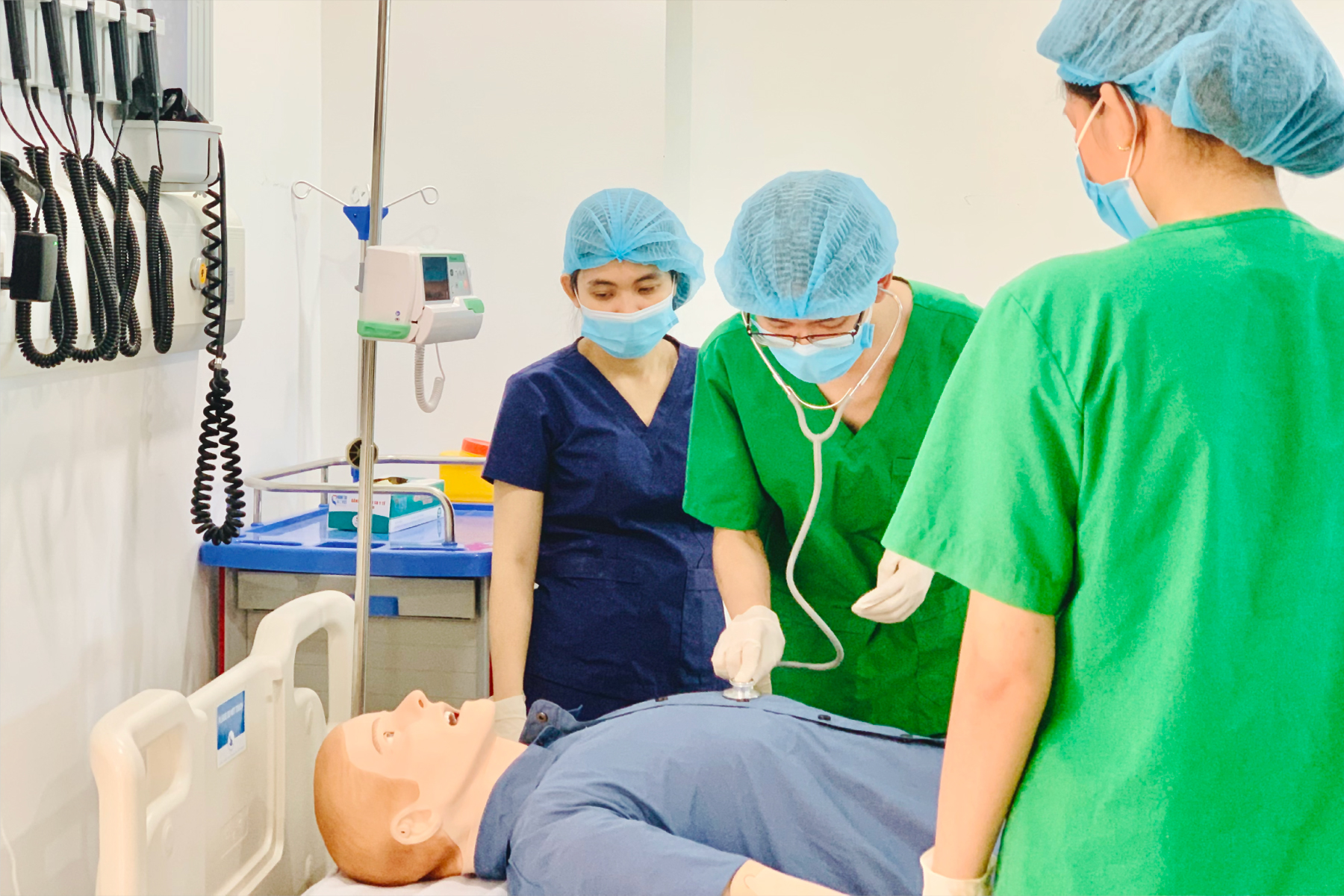
To apply theoretical knowledge and strengthen critical thinking skills, students participate in thinking exercises, including case studies and problem-solving activities. In clinical education, these are known as Patient Management Problems (PMPs). The purpose of these exercises is to help students apply knowledge, practice reasoning and analytical skills, identify diagnostic problems, and determine optimal management and decision-making strategies without requiring real patients or communities. Audio-visual technology and simulation methods are extensively used to illustrate situations and replace real clinical settings when appropriate. This approach is also applied in social sciences, basic medical sciences, and community medicine.
Stage 3: Training of Procedural and Psychomotor Skills
This stage focuses on developing hands-on technical and psychomotor skills and consists of two sub-stages.
First, lecturers demonstrate procedures twice using large A0 checklist boards: the first demonstration is performed quickly, while the second is conducted slowly and in detail. Students may also watch instructional video clips demonstrating each procedural step on real patients.
Second, students practice in groups using the “Coupling – Saying – Doing” (CSD/CNL) learning technology. Two students work together as partners: one performs the procedure while the other reads the checklist aloud, after which they switch roles. Through this method, every student becomes an active collaborator in supervision and peer assessment.
Stage 4: Training of Attitudes, Communication, and Professional Behavior through Role-Playing
This stage is designed to develop professional attitudes, communication skills, humanistic behavior, and soft skills. In traditional teaching models, attitudes were often overlooked, leading to weaknesses in patient communication. Role-playing activities are organized either in small groups or before the entire class to help students practice empathy, professionalism, and effective interpersonal interaction.
Stage 5: Reflection, Self-Assessment, and Competency Recording
Students summarize their learning experiences, conduct self-assessments, and record their practice outcomes in competency logs or clinical journals. Initially, not all lessons may be fully integrated, but integration becomes more effective over time as teaching methods continue to improve. The fundamental principle is that every lesson and subject contributes directly to competency development.
Final assessments commonly include:
Knowledge assessment (e.g., written tests),
Skills assessment (e.g., checklists or rating scales),
Attitude assessment (e.g., role-playing performance).
During the concluding sessions, lecturers emphasize key learning points or encourage students to summarize essential concepts themselves, thereby promoting active participation in reflective learning.
A distinctive feature of Phan Chau Trinh University is its integrated teaching hospital system. As a result, students begin hospital-based clinical practice from their first year of study. Clinical training accounts for approximately 70% of the total curriculum duration, enabling students to develop strong clinical skills, professional competence, and practical expertise.
+ Doctors and paraclinical specialists at hospitals and medical facilities perform medical examinations, treatment, emergency care, monitoring, and health counseling.
+ Preventive medicine physicians in the public health system participate in epidemiological surveillance, disease prevention and control, and public health promotion.
+ Lecturers or researchers at universities, research institutes, and medical and pharmaceutical training institutions.
+ Healthcare management officials at government agencies or health insurance organizations.
+ Doctors work in international or non-governmental organizations focused on health, humanitarian aid, and community development.
ĐẠI HỌC PHAN CHÂU TRINH
- 09 Nguyễn Gia Thiều,
P. Điện Bàn Đông,
Thành phố Đà Nẵng
BỆNH VIỆN ĐẠI HỌC Y KHOA PHAN CHÂU TRINH
- 09 Nguyễn Gia Thiều,
P. Điện Bàn Đông,
Thành phố Đà Nẵng


